Home / Catalogue / Moulded threads, adapters & closures
Injection moulded threads, adapters and screw closures
Inlet and outlet adapters, fittings, screw caps, lids and threaded end caps. The thread is formed in the tool rather than cut afterwards, and the seal comes from the end face or an O-ring groove — not from the thread.
A threaded part is a tool structure question, not a process setting. An internal thread has to be unscrewed out of the tool, which means a mechanism; an external thread can use a slider, a collapsing core, or unscrewing. That mechanism sets the tool cost, the lead time, and whether the job runs steadily hour after hour. A lot of thread work never gets quoted sensibly because the buyer is pricing it as a plain part.
The other common misunderstanding: a thread does not seal. It supplies clamping force. What holds the water is an end face, a taper or an O-ring groove. Get the thread perfect and leave the sealing face uneven and it still weeps. On this kind of part the thread and the sealing surface have to be looked at together at design stage, not split between two people working separately.
There are three routes out of an internal thread: an unscrewing mechanism, where a gear train or hydraulic motor rotates the core out; a collapsing core, which splits and shrinks before ejection; or cutting the thread afterwards. Unscrewing gives the best accuracy and cycle and costs the most in tooling. A collapsing core suits short threads at high volume. Post-cutting is the cheapest tool but adds an operation and an inspection risk. On low volume we sometimes recommend post-cutting to get the part into production, then converting the tool once the volume settles.
The thread form follows your standard: BSP, NPT, metric, or your own. One thing to be clear about — BSP and NPT are both sealing threads with different flank angles and they do not interchange; one wrong letter on the drawing and the parts are scrap. A thread gauge is the direct way to verify. If you can send the gauge we work to it; without one we measure pitch diameter on the profile projector and by three-wire method, and the method gets stated on the inspection report.
Two more details on closures. A tamper-evident band is formed by a cutting ring and bridges in the tool; the number of bridges and the toughness of the resin decide how it tears — too few and it breaks on the way to the shelf, too many and the customer cannot open it, so the try-out includes tearing one. On torque, a PP cap is cheap but creeps, and a fortnight after tightening it has lost some of its clamp; where torque has to hold, use POM or thicken the thread root. Raising that at quoting stage is far cheaper than changing it in series.
2 business days · 25–45 days · Formed in the tool, not cut after · FOB Qingdao · T/T
Moulded threads, adapters & closures — photos from our floor
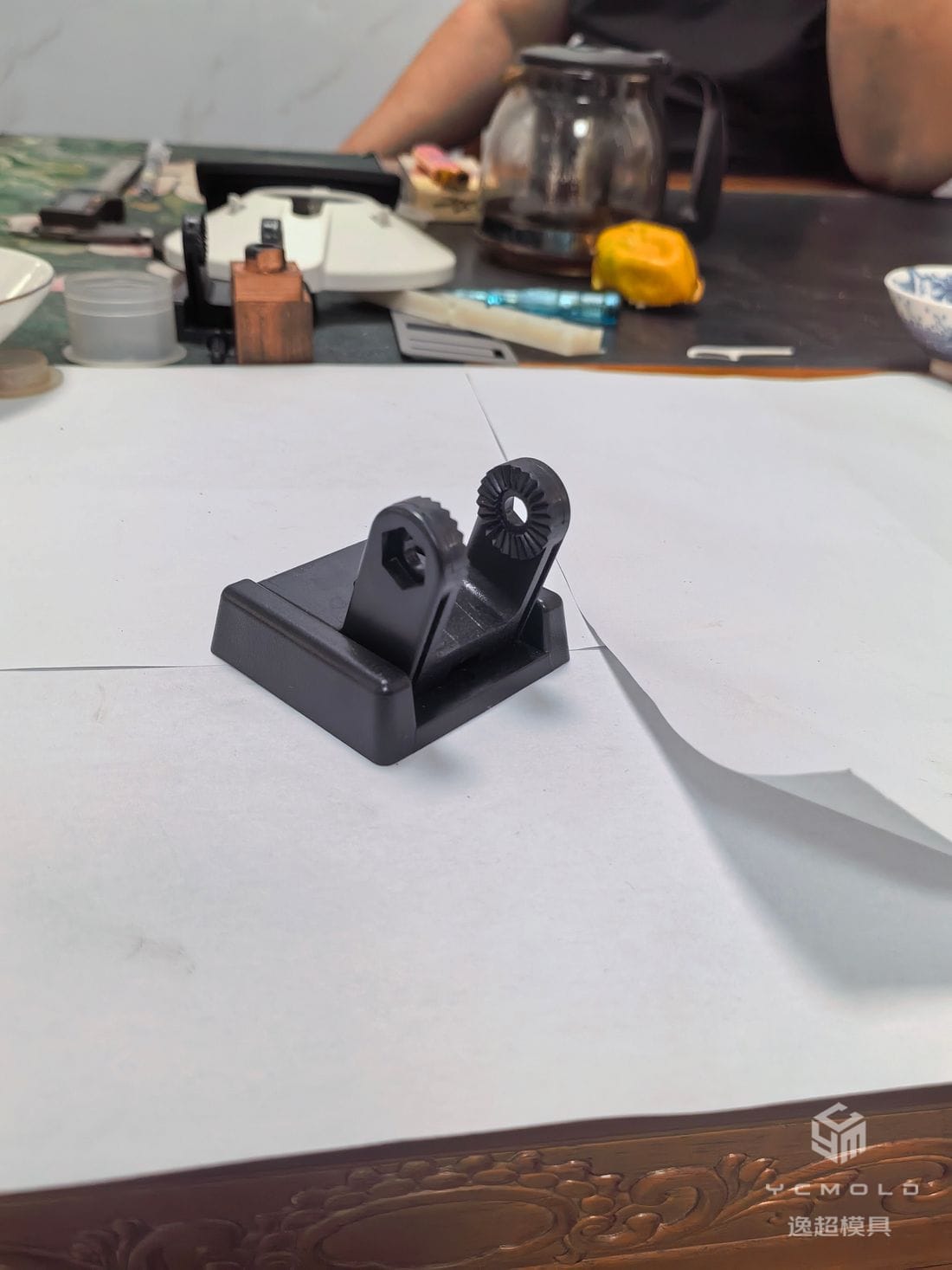
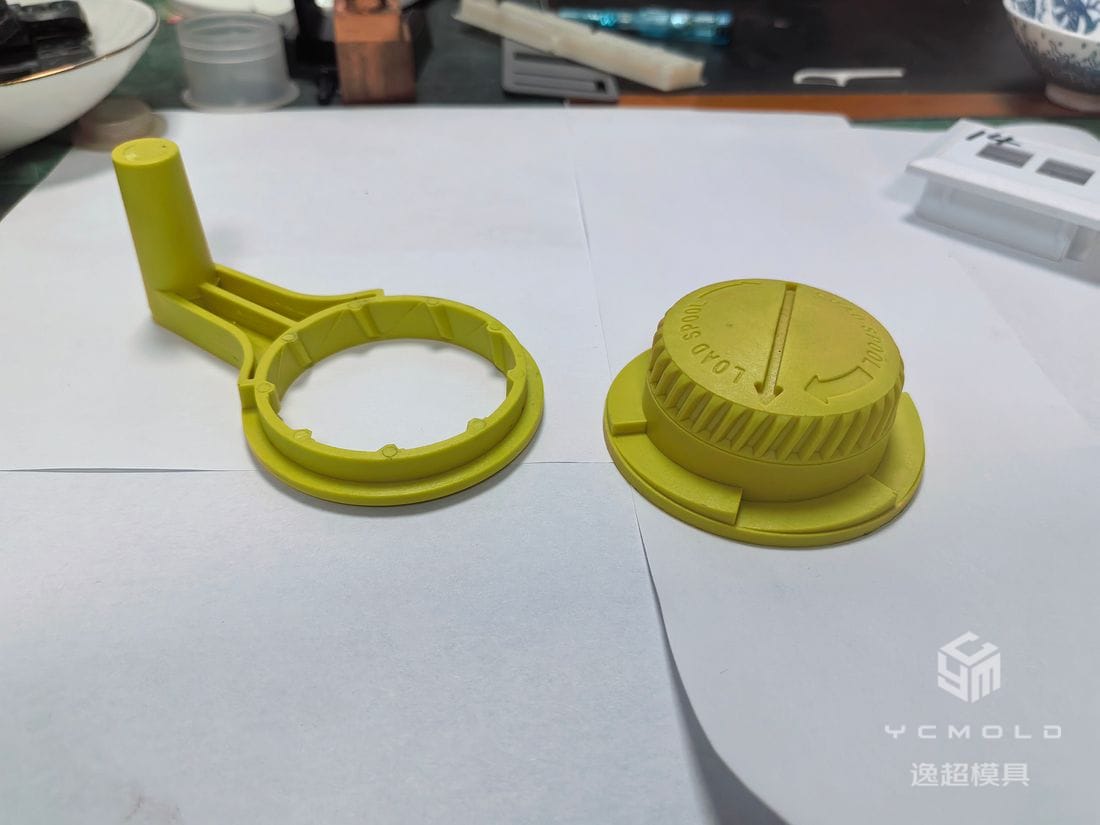
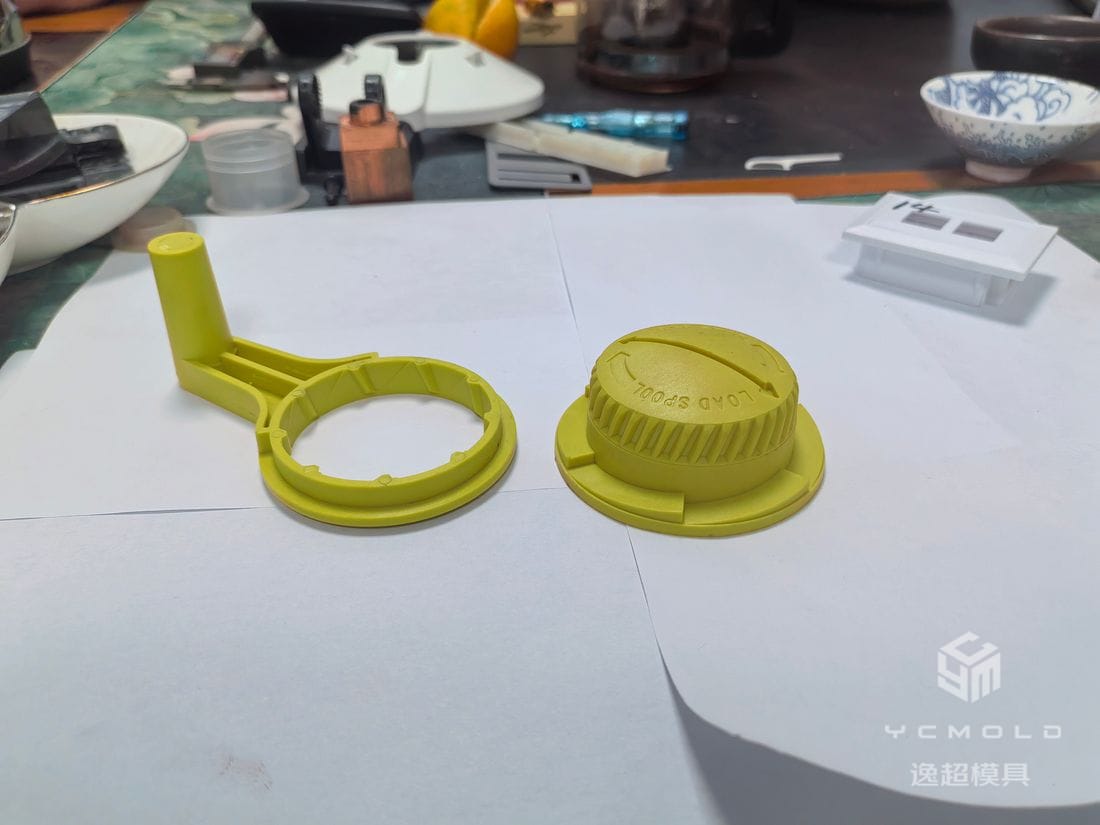
Part types we actually run
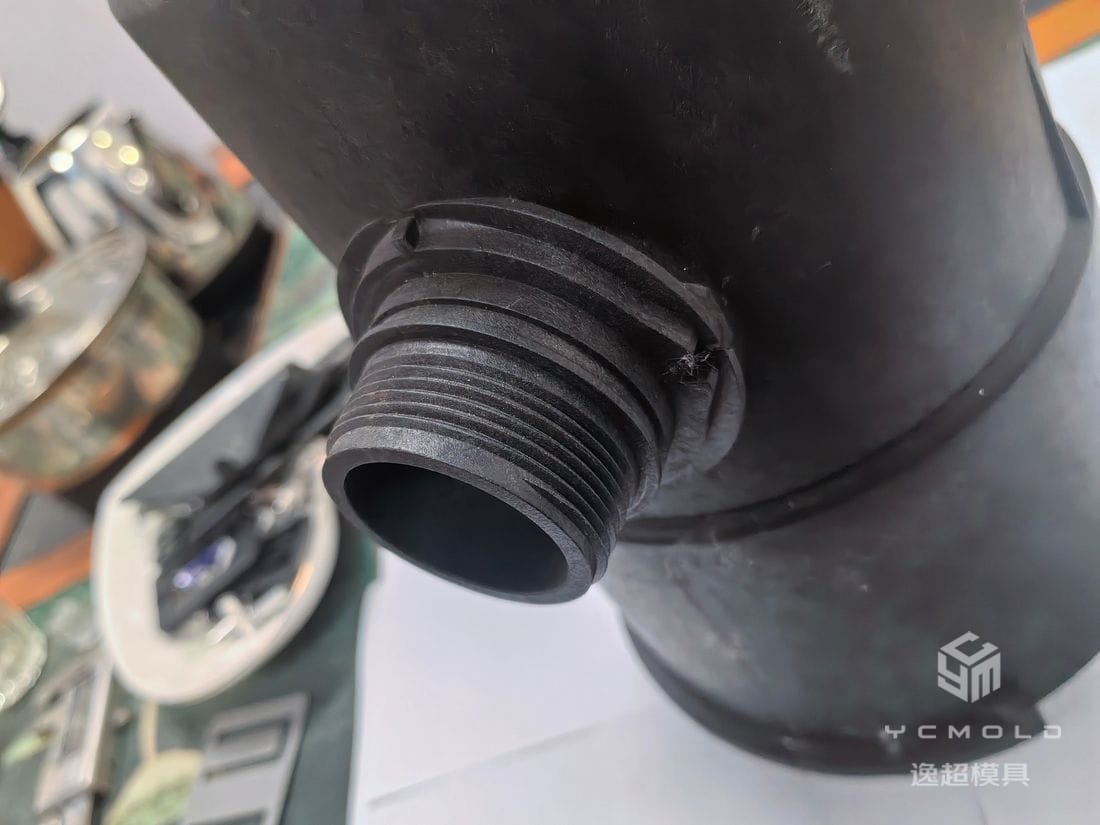
Inlet and outlet adapters
External thread with a flange face — thread form and face squareness are controlled together, and a slight tilt weeps
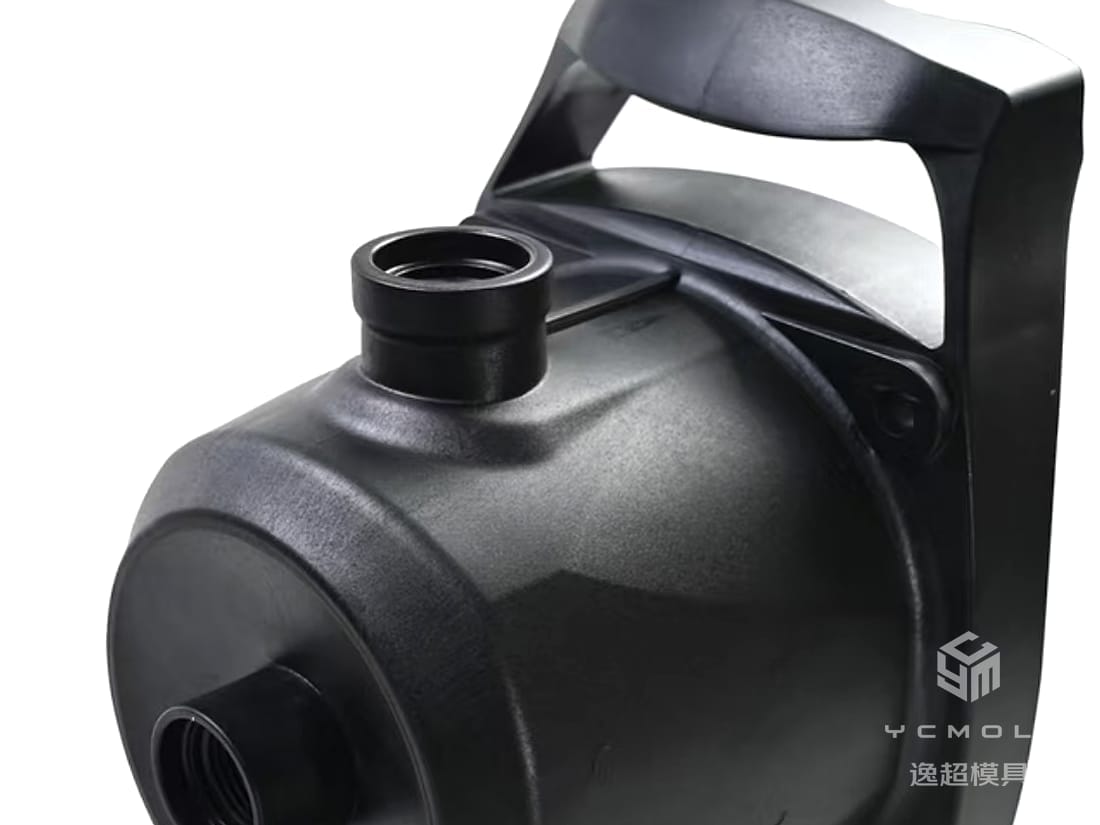
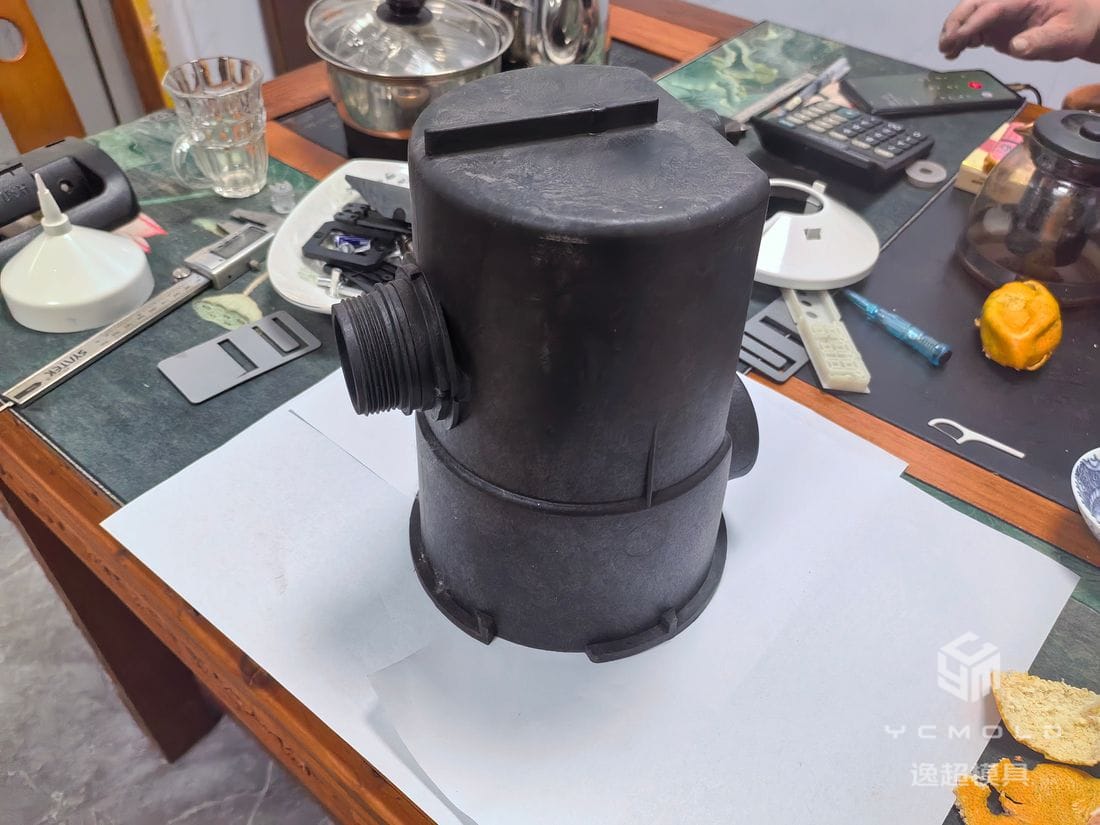
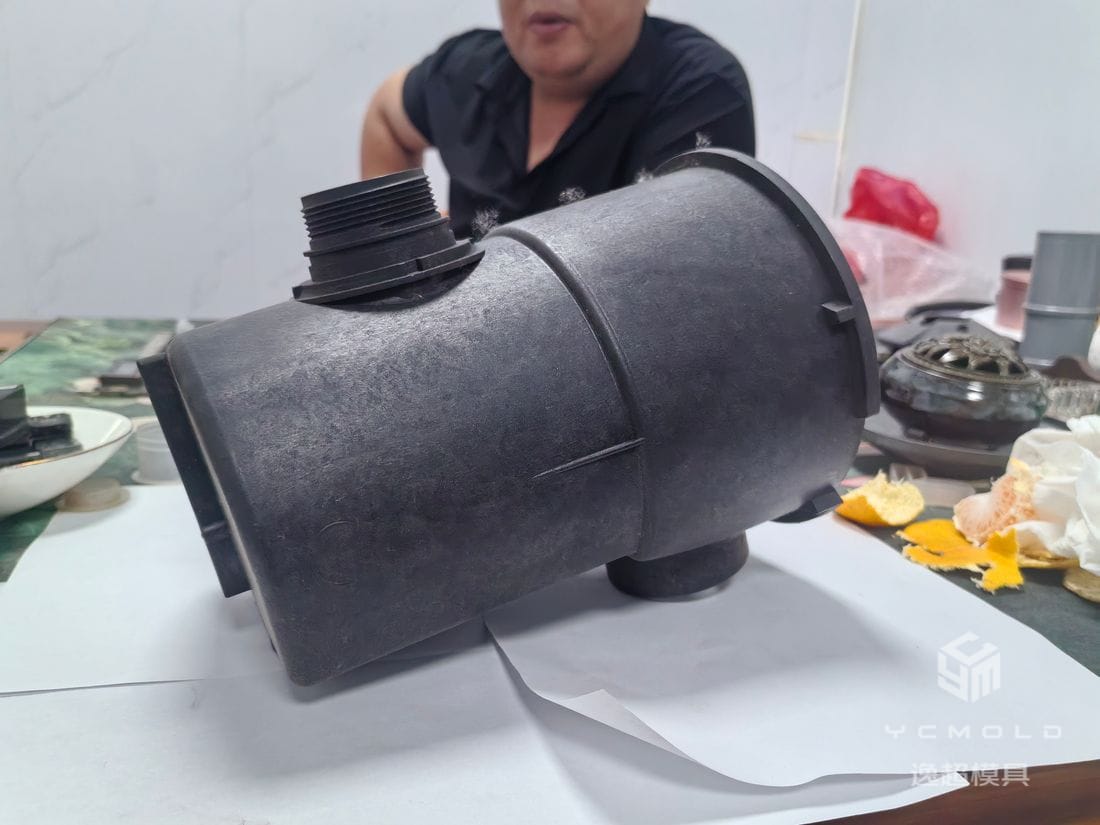
Moulded thread ports on pump and valve bodies
Threads formed straight into the housing — the demoulding method has to be laid out with the body structure, not around it
Screw caps and threaded lids
Internal thread plus knurling, where pattern depth and draft have to match or the surface scuffs
Tamper-evident closures
Cutting ring and bridges formed in the tool; bridge count follows resin toughness, and the try-out includes tearing one open
Threaded end caps and plugs
Usually carry an O-ring groove where depth and width leave room for compression — too narrow and it will not seat, too wide and it will not seal
Fittings and quick connectors
Thread and snap fit on one part, with two release mechanisms laid out inside a single tool
O-ring grooves and sealing faces
Where sealing is actually decided — groove floor finish and radii matter more than thread accuracy
Threaded parts with anti-rotation features
Serrations, flats or ribs to stop it backing off — their position tolerance has to be tied to the thread axis, not dimensioned separately
Which material, and why
PP — The most common choice for threaded parts — cheap and chemically resistant, though modest in stiffness and creep, so high-torque joints need thicker walls or a different resin
PA(尼龙) — Strength and wear resistance for loaded threads and water fittings; it swells with moisture and the joint tightens, so assembly dimensions need allowance
POM — Dimensionally stable with low friction — precision threads and caps opened repeatedly, and the most stable at holding torque over time
ABS — Cosmetic caps with good surface and easy colour, but thread strength is modest and only suits light duty
PC — Clear or impact-resistant caps; sensitive to solvent stress cracking, so watch contact with oils and cleaners
TPE — Sealing lips and soft overmould, shot onto a rigid cap in a second pass — one gasket fewer in the bill of materials
Lucas — Lucas@ycmold.top · WhatsApp +86 183 6966 7875 · No.363 Shengli West Street, Weicheng District, Weifang, Shandong, China