Home / Catalogue / Pump & fluid handling
Injection moulded pump housings, end caps and impellers
Plastic housings, end caps, strainer discs and impeller parts for clean-water, booster and garden pumps — with moulded threads, seal seats and flange faces, on tooling we build ourselves.
Pump parts are unforgiving in a few specific places: a moulded thread has to hold without leaking, the seal seat has to stay concentric, the flange face has to stay flat, and uneven wall thickness means sink, warp and a housing that will not assemble. None of that is solved by the moulding machine — it is decided by tool structure and cooling. We settle the sealing face and the thread demoulding method at the design stage, then check part by part at try-out instead of finding the leak in series production.
Everything below is a part we have actually run in series — not a rendering. If you have a new part with similar features, send the 3D file or a sample and you get a price plus DFM notes within two business days, including where we expect sink and what we would change.
Two things are worth putting in writing. First, threads: we mould them rather than cut them afterwards, because a moulded thread is stronger, seals better, and removes a secondary operation plus the inspection risk that comes with it. Internal threads use an unscrewing mechanism, external ones a slider or an unscrewing core. We only fall back to cutting when the pitch is very fine, the profile is unusual, or another feature on the part is in the way. Second, sealing: a thread does not seal. It provides clamping force. What actually holds the water is the end face, the O-ring groove or the taper — so those surfaces are checked as a system at try-out, assembled onto the mating part rather than measured on their own.
Impellers and housings are worth building as a pair. The clearance between impeller outside diameter and the volute decides head and efficiency; split those two tools between suppliers and the tolerances stack until the impeller either rubs the cavity or runs with too much gap. Built together they are machined from the same datum, checked as a pair at try-out, and packed as a pair.
2 business days · 25–45 days · 300,000+ shots · FOB Qingdao · T/T
Pump & fluid handling — photos from our floor
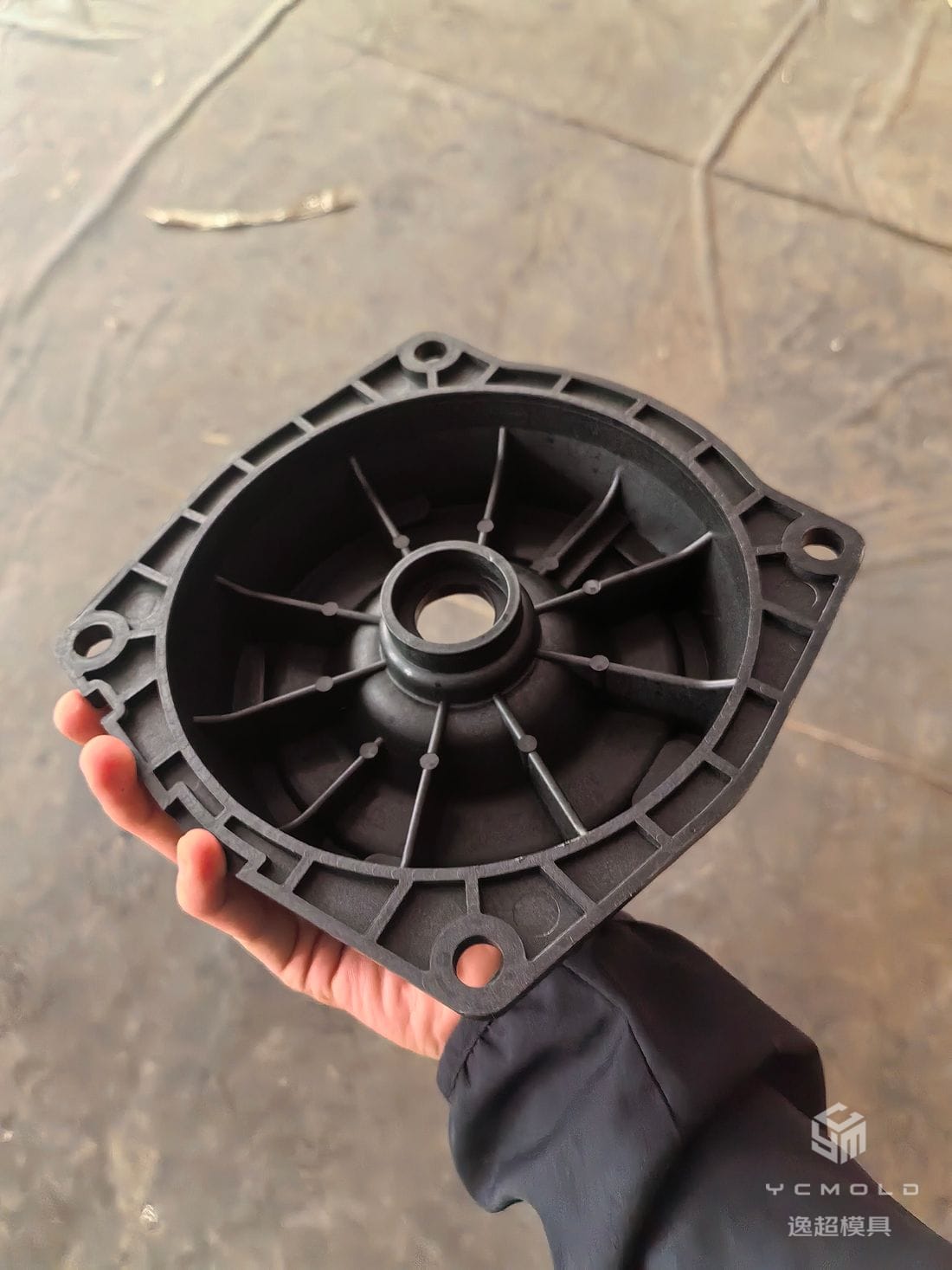
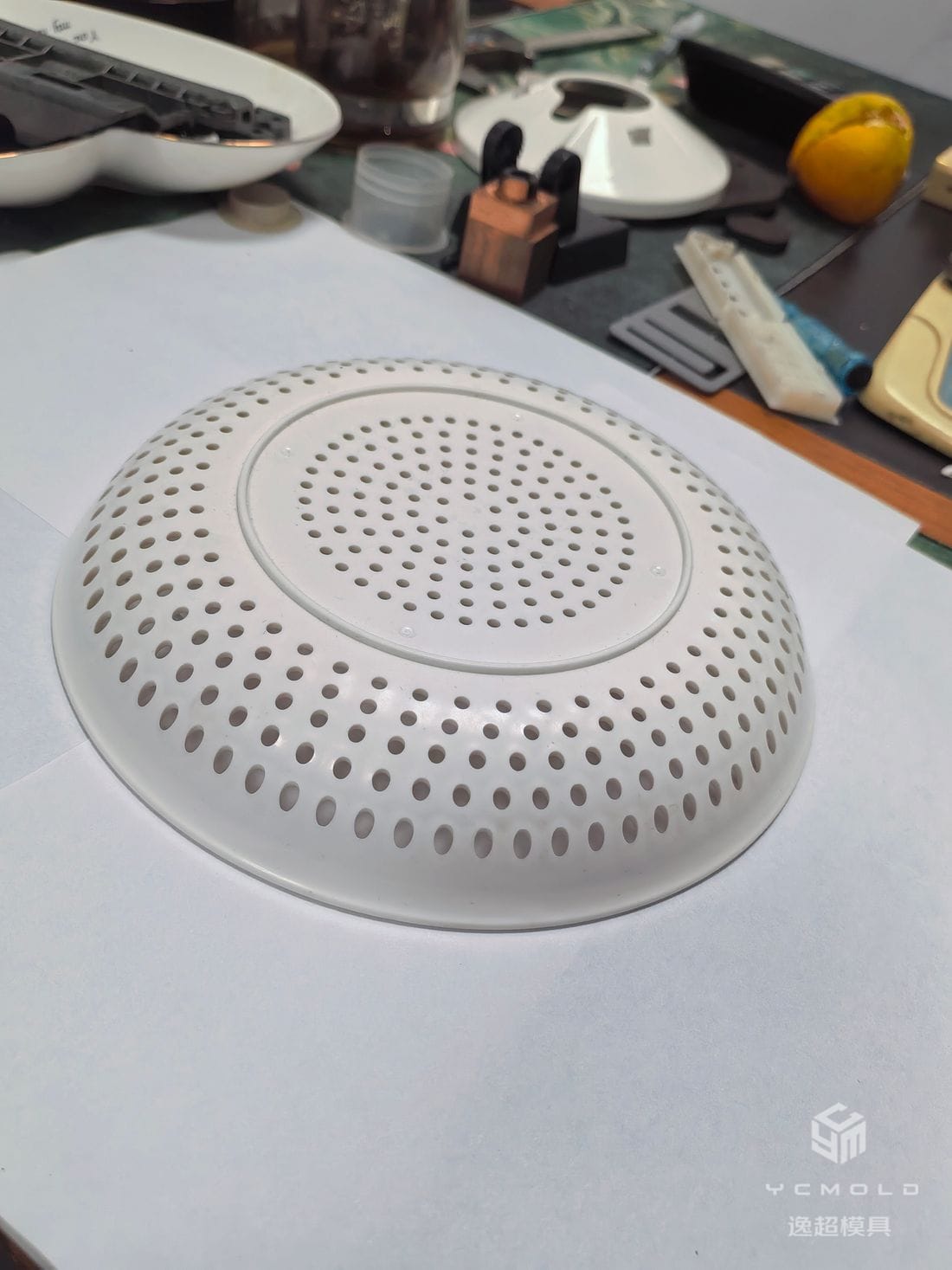
Part types we actually run
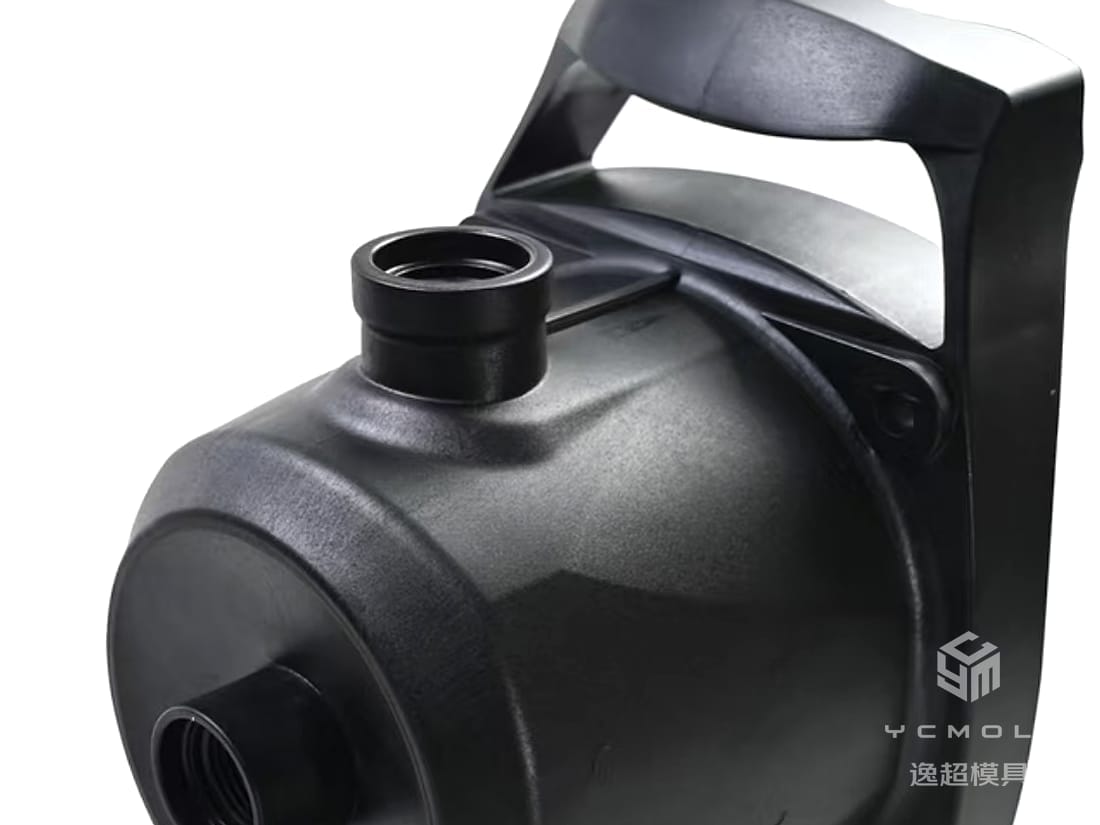
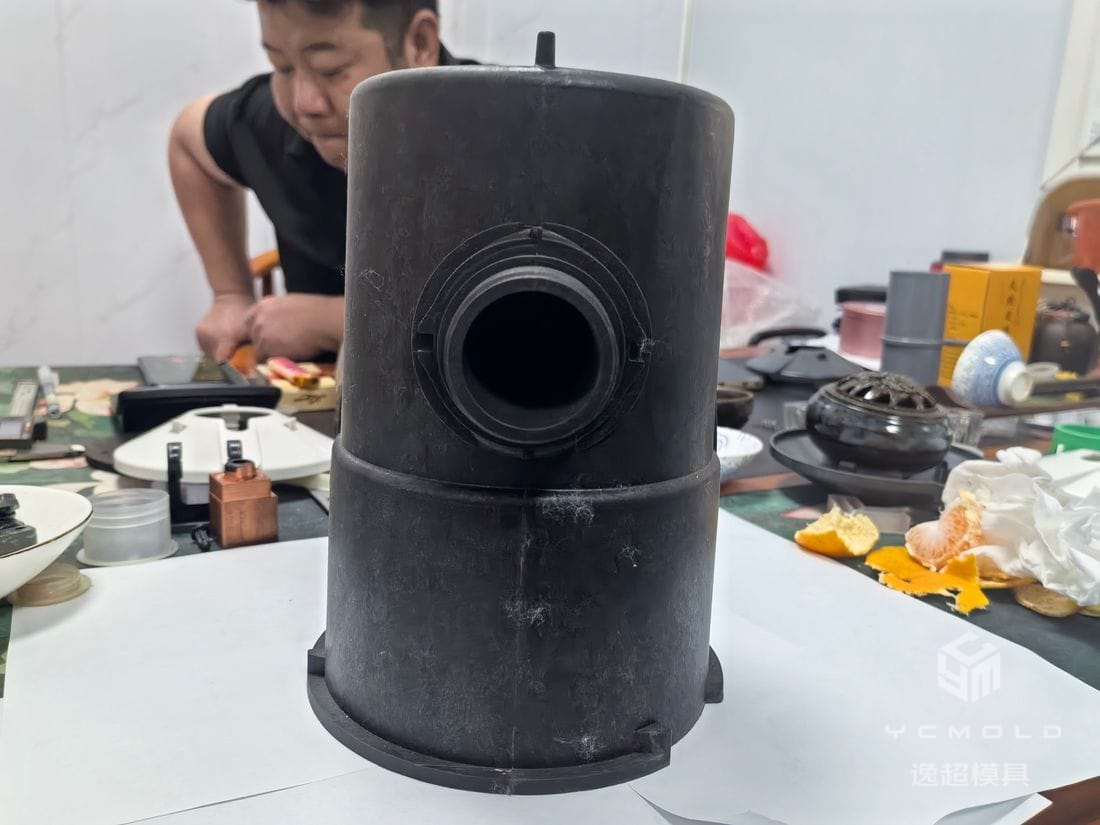
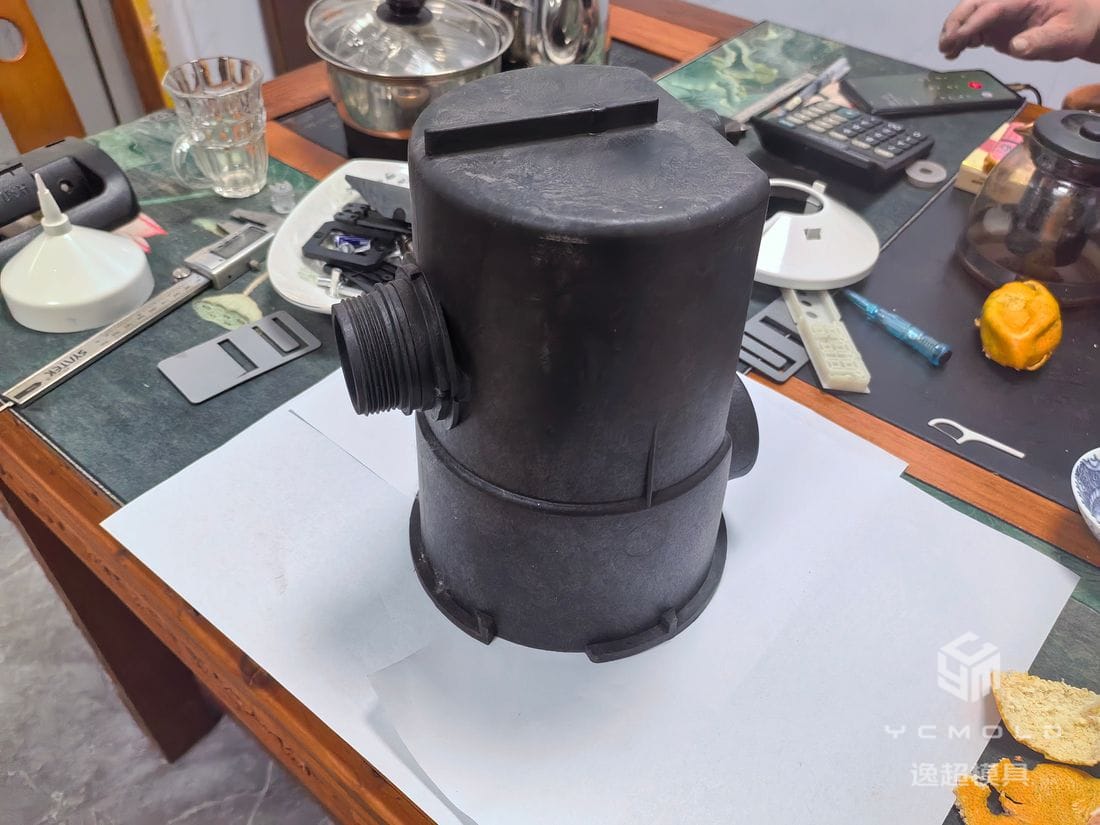
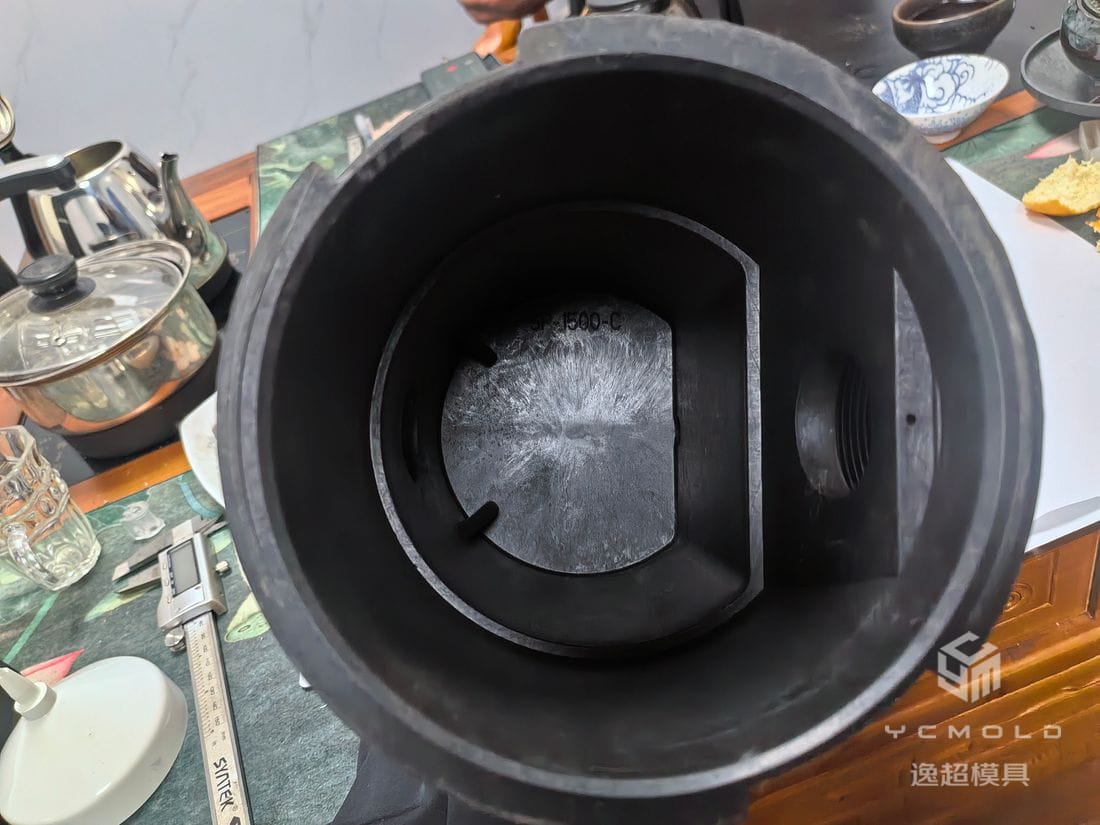
Pump housings and volute casings
With inlet and outlet ports, internal flow paths and mounting flanges — wall transitions and boss roots are where sink shows up
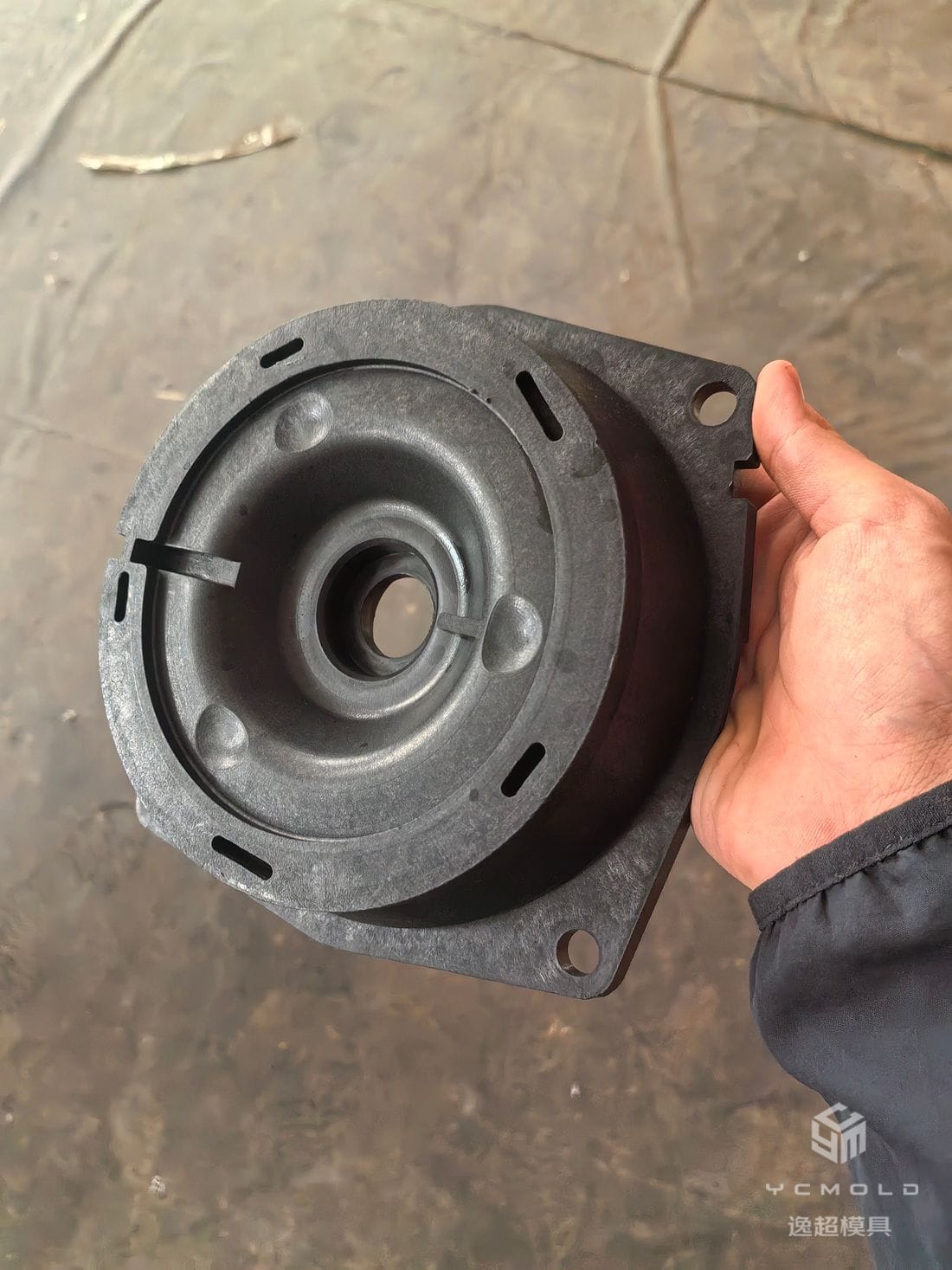
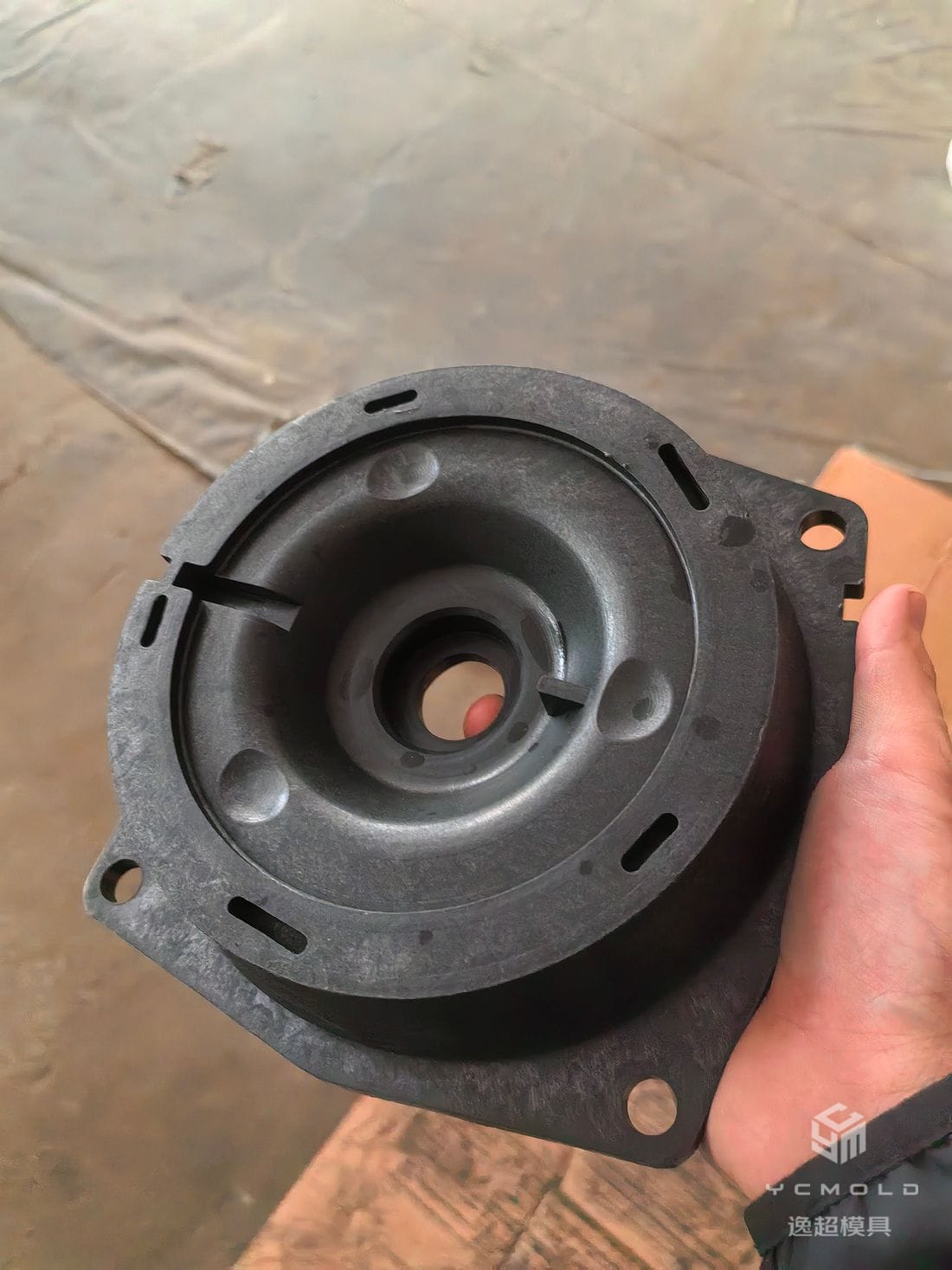
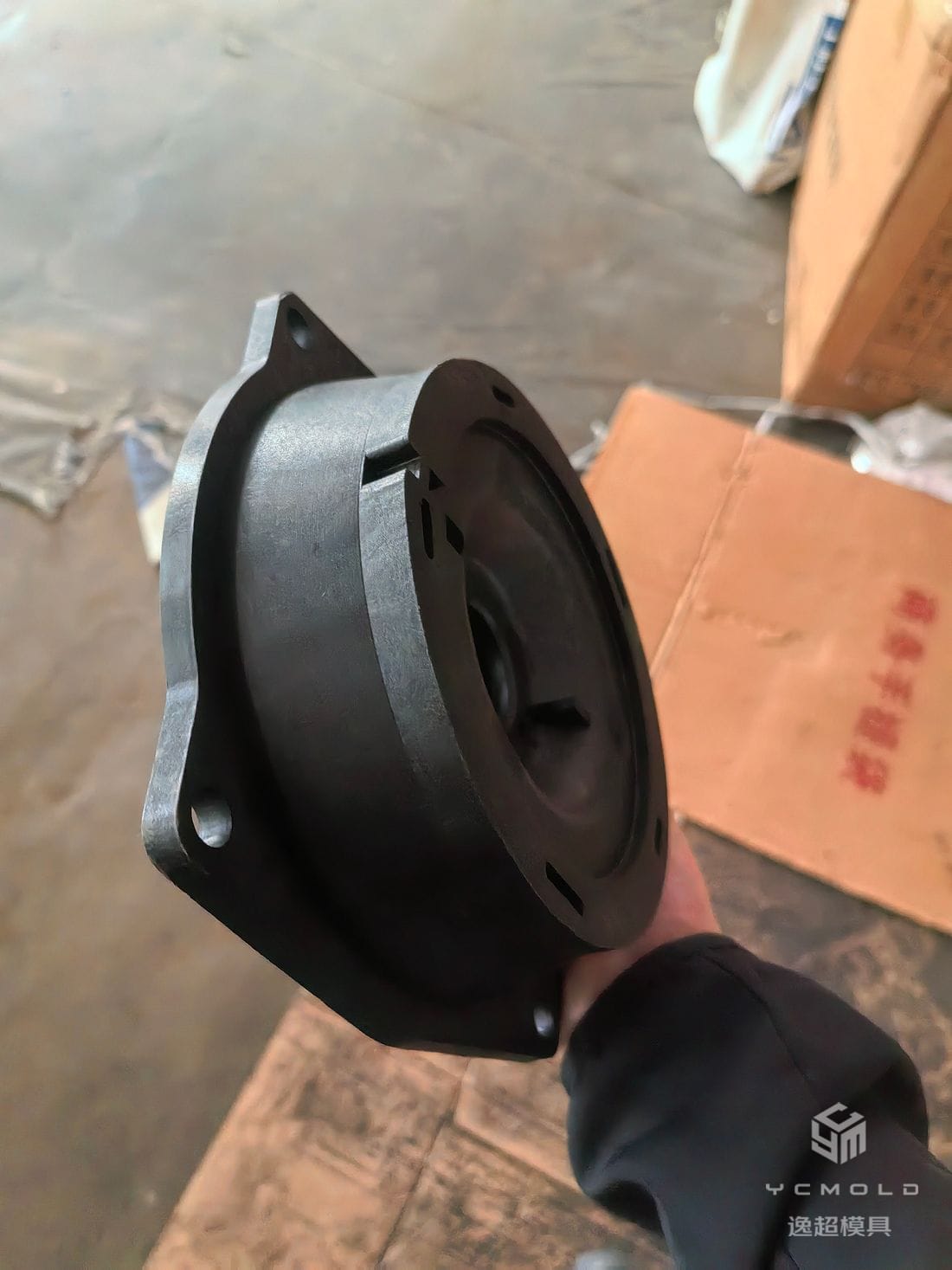
Bearing housings and end caps with seal seats
Seal-seat concentricity comes from tool machining; the flatness of the end face decides whether it weeps
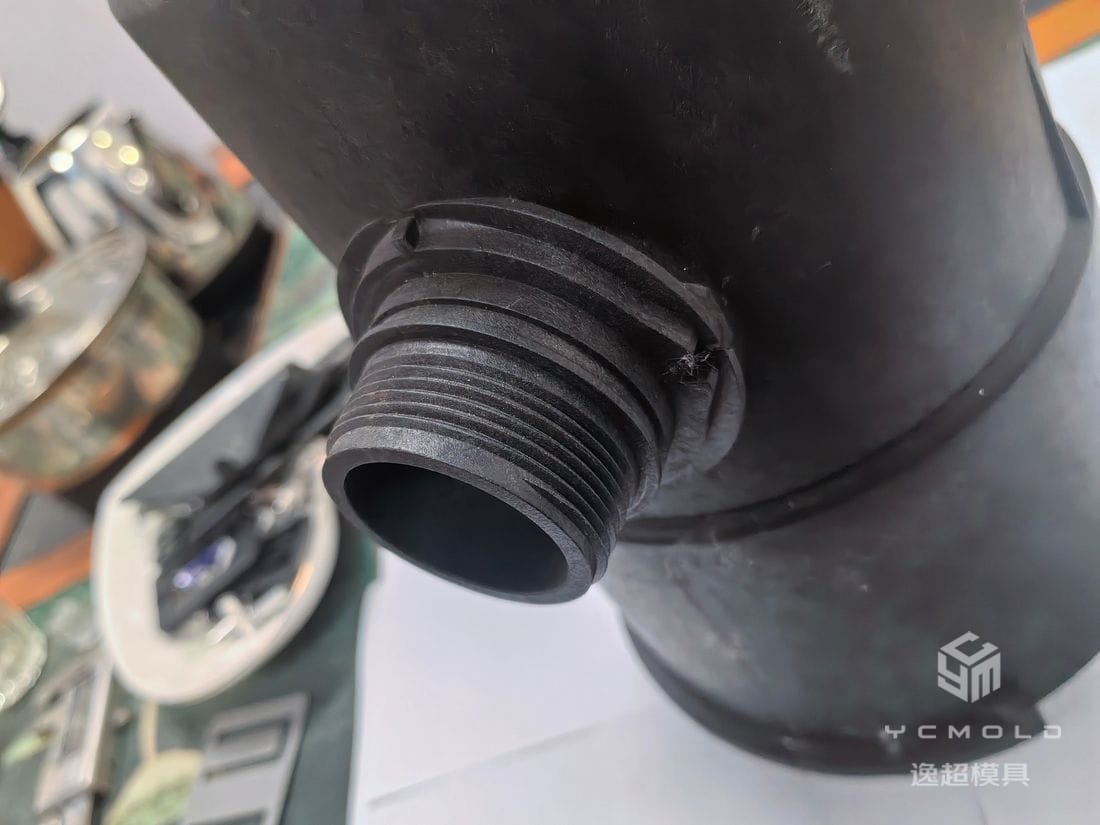
Inlet / outlet adapters with moulded threads
Threads formed in the tool rather than cut afterwards — the demoulding method follows the thread type, unscrewing or sliding
Impellers and diffusers
Blades, hub and shaft bore in one shot; balance gets confirmed after try-out
Filter baskets, strainer discs and perforated plates
Dense perforations rely on fine core pins in the tool — hole size and pitch consistency depend on how those pins are supported
Motor covers and terminal boxes
Ingress protection lives in the spigot and seal groove — groove depth and width must leave room for gasket compression
Float housings and switch brackets
Thin-wall parts — draft and ejector placement have to be generous or they stress-whiten on ejection
Which material, and why
PP — Chemical resistance and no moisture pick-up — the default for clean-water and garden pump housings, and the cheapest option
PA66 + GF — A step up in stiffness and pressure capability for loaded parts, flanges and brackets. Glass orientation drives shrinkage, so gate position has to follow the flow
POM — Dimensionally stable with low friction — valve cores, sliders and anywhere two parts keep working against each other
PC — Clear sight glasses and flow windows, so the customer can see the impeller turning
TPE — Gaskets and soft contact faces, overmoulded onto a rigid housing in the same tool
Lucas — Lucas@ycmold.top · WhatsApp +86 183 6966 7875 · No.363 Shengli West Street, Weicheng District, Weifang, Shandong, China