Home / Catalogue / Filter discs, strainers & grilles
Injection moulded filter discs, strainer baskets and grilles
Pre-pump strainer discs, machine inlet screens, appliance filters, vent grilles and perforated plates. Hundreds of holes the same size, a face that stays flat, and no flash for debris to catch on.
The work in a perforated part sits in the few hundred core pins in the tool, not in the moulding machine. Make the holes small and deep and the pins drift or snap; miss a broken pin and the whole run is scrap, because one blocked hole and one missing hole look identical from the outside. Uneven pitch changes the open area, so the screen runs faster in one place and clogs there first.
Two things get missed. Flatness: a strainer disc has to sit against the housing face, and once it bows the flow bypasses around the edge — the screen is there and doing nothing. Flash: a burr on a filter part is worse than on any other part, because it catches fibre and grit, builds up, and the whole disc gets replaced. Acceptance on this kind of work is not just a hole count.
How small a hole can go is the most practical question on this kind of part. Around 1 mm is routine. Down to 0.6–0.8 mm is doable, but only after looking at depth and hole count: once the depth passes three times the diameter, pin life falls away and drift and breakage climb, and that maintenance ends up in the piece price. Below 0.5 mm we generally advise against a steel tool — mesh inserts, a different structure or a different filtration approach usually works out cheaper, and we say so rather than quote it anyway.
Two things on the tool side control the risk: the perforated area is built as an insert, so a broken pin means replacing the insert rather than the whole cavity block; and the first sample is gauged hole by hole, with batch sampling after that. Packing pressure needs to be enough but not excessive — over-pack and a skin forms across the hole mouth, which reads as an undersized hole but is really a blocked one. That parameter gets fixed at try-out and written into the process sheet.
On material, PP covers most water filtration — cheap, chemically resistant, no moisture pick-up. Hot water or loaded parts go to PA. Frames and slides that need dimensional stability and wear resistance go to POM. Food-contact grades can be specified, with one caveat stated plainly: we hold no food-contact certification ourselves, the compliance documentation comes from the resin supplier, and what we can guarantee is that the named grade is what runs.
2 business days · 25–45 days · Separate insert — broken pins replaced alone · FOB Qingdao · T/T
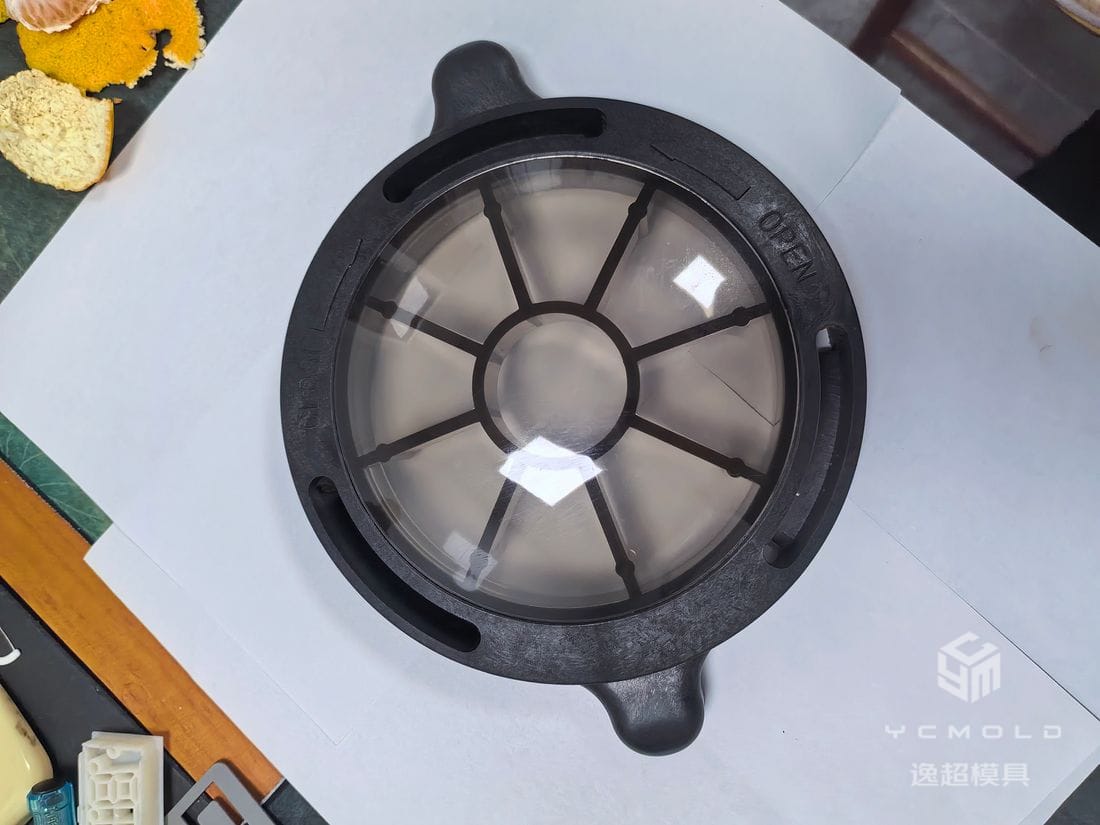
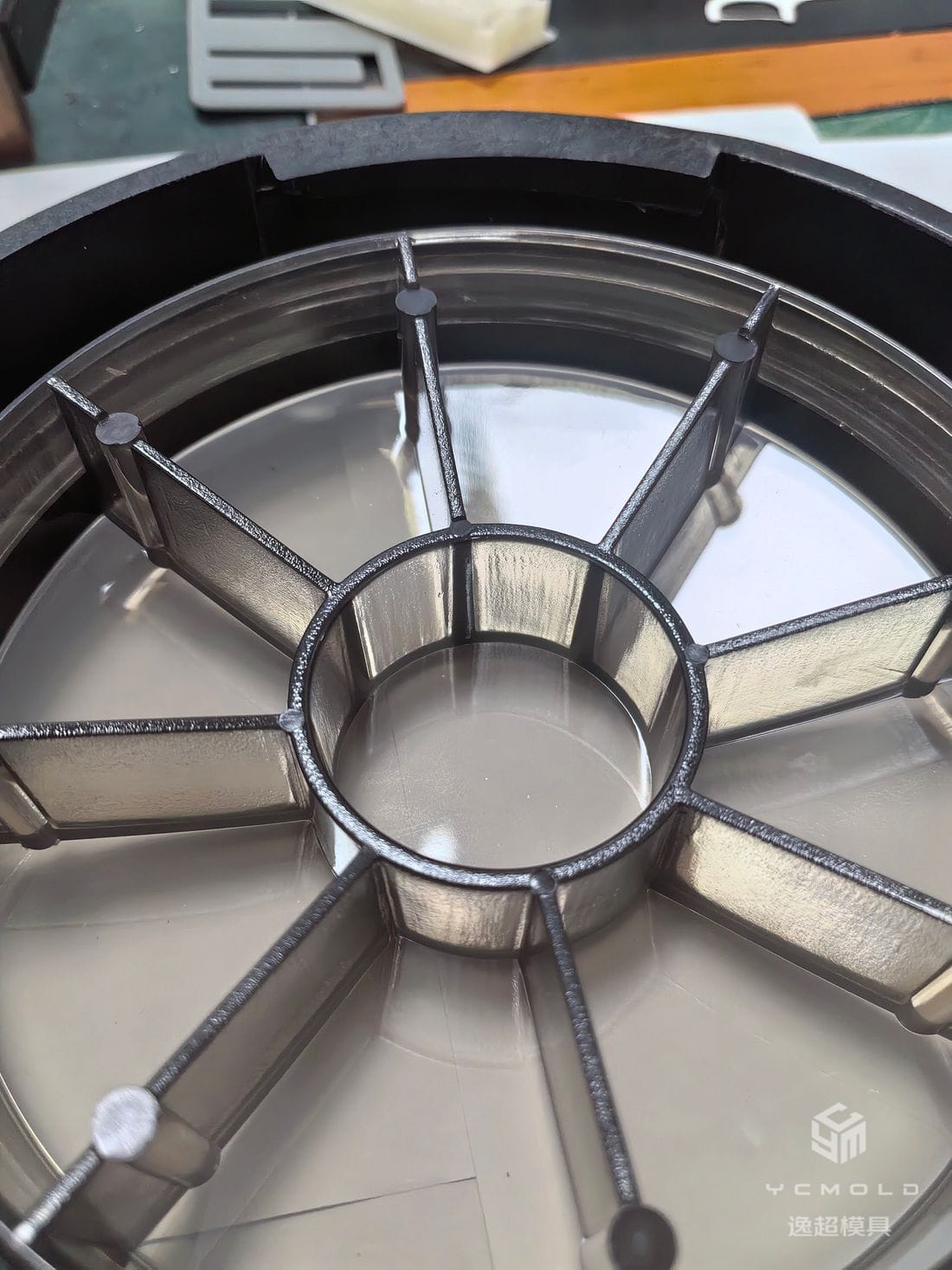
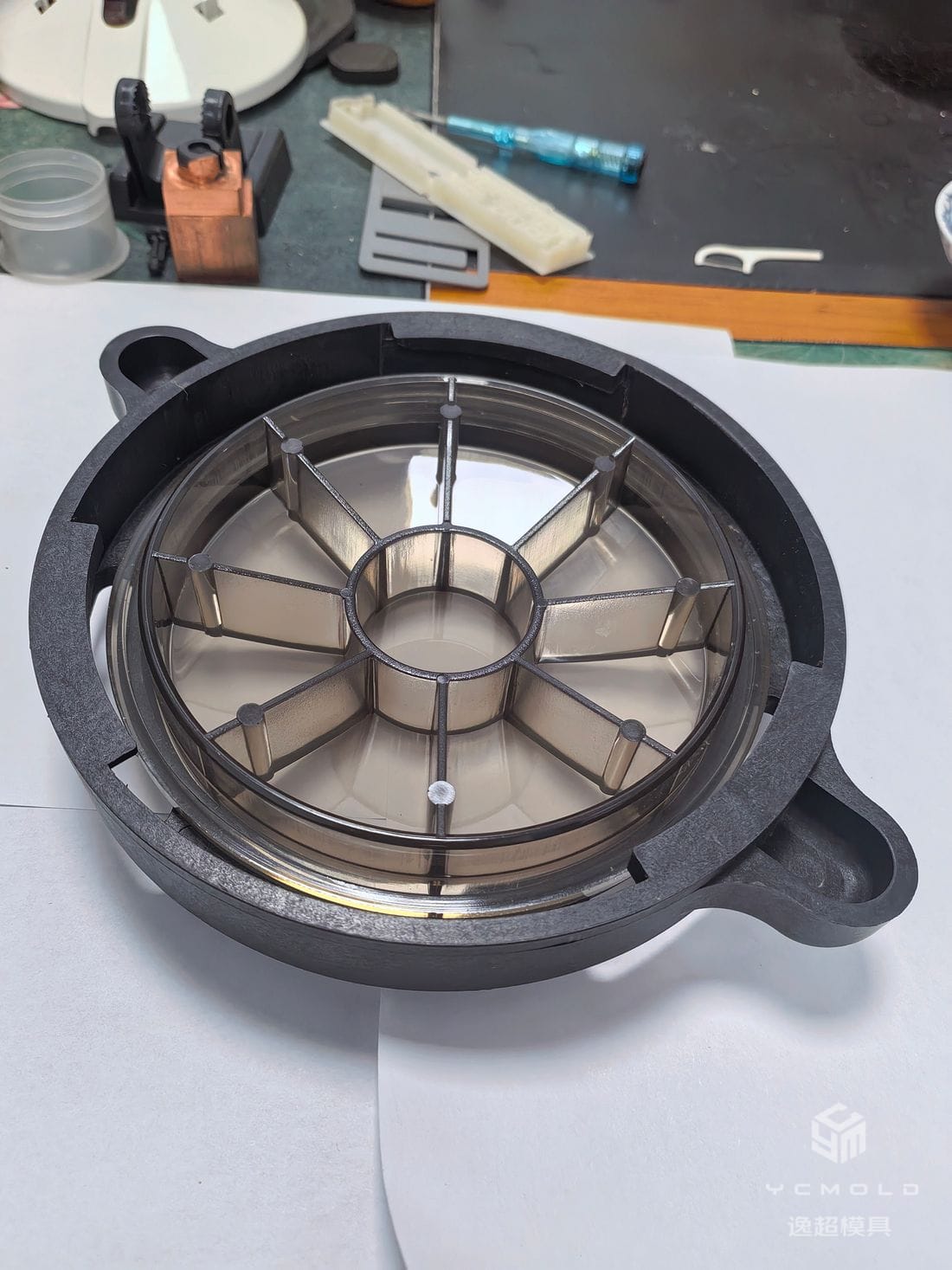
Filter discs, strainers & grilles — photos from our floor
Part types we actually run
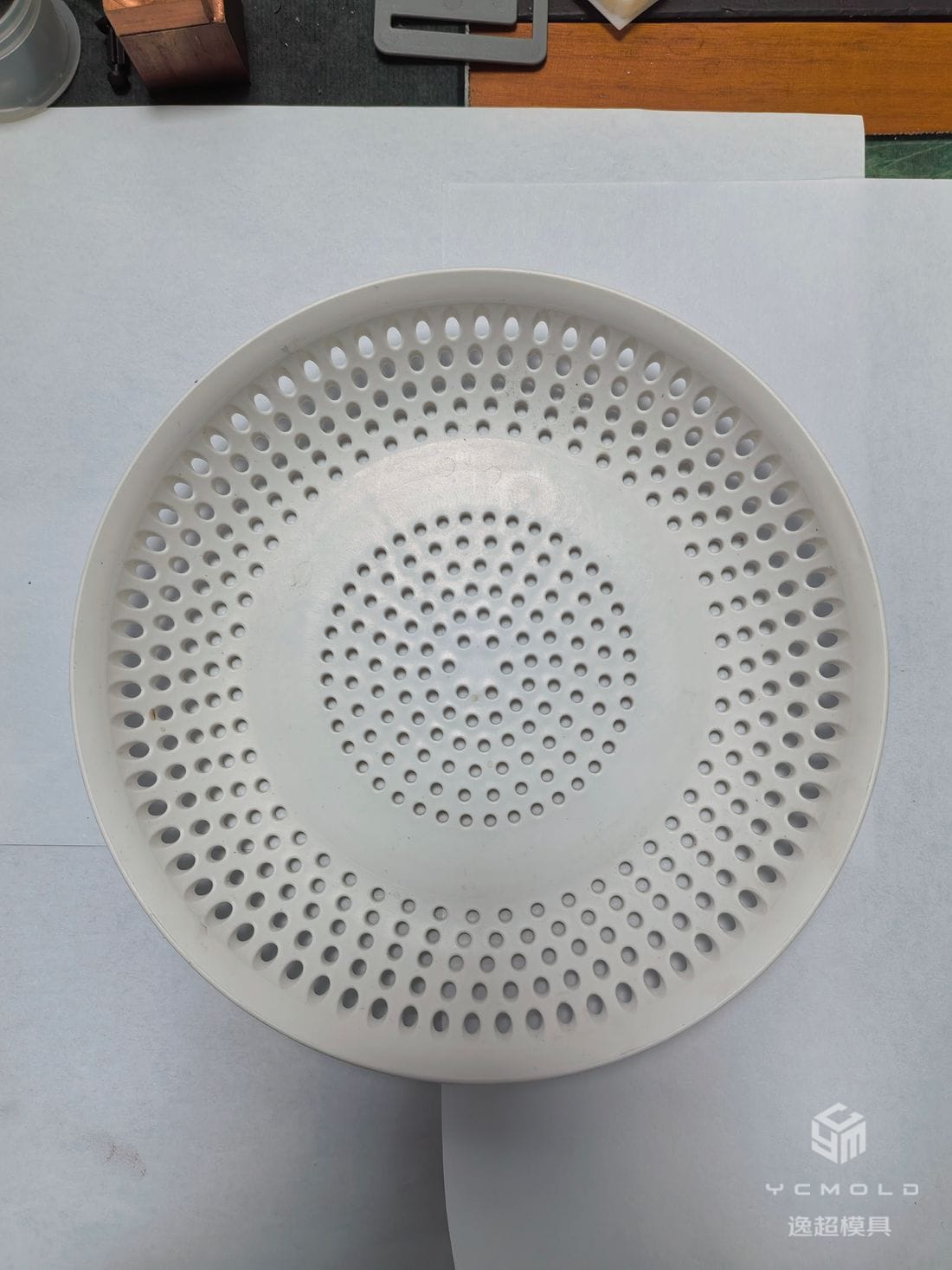
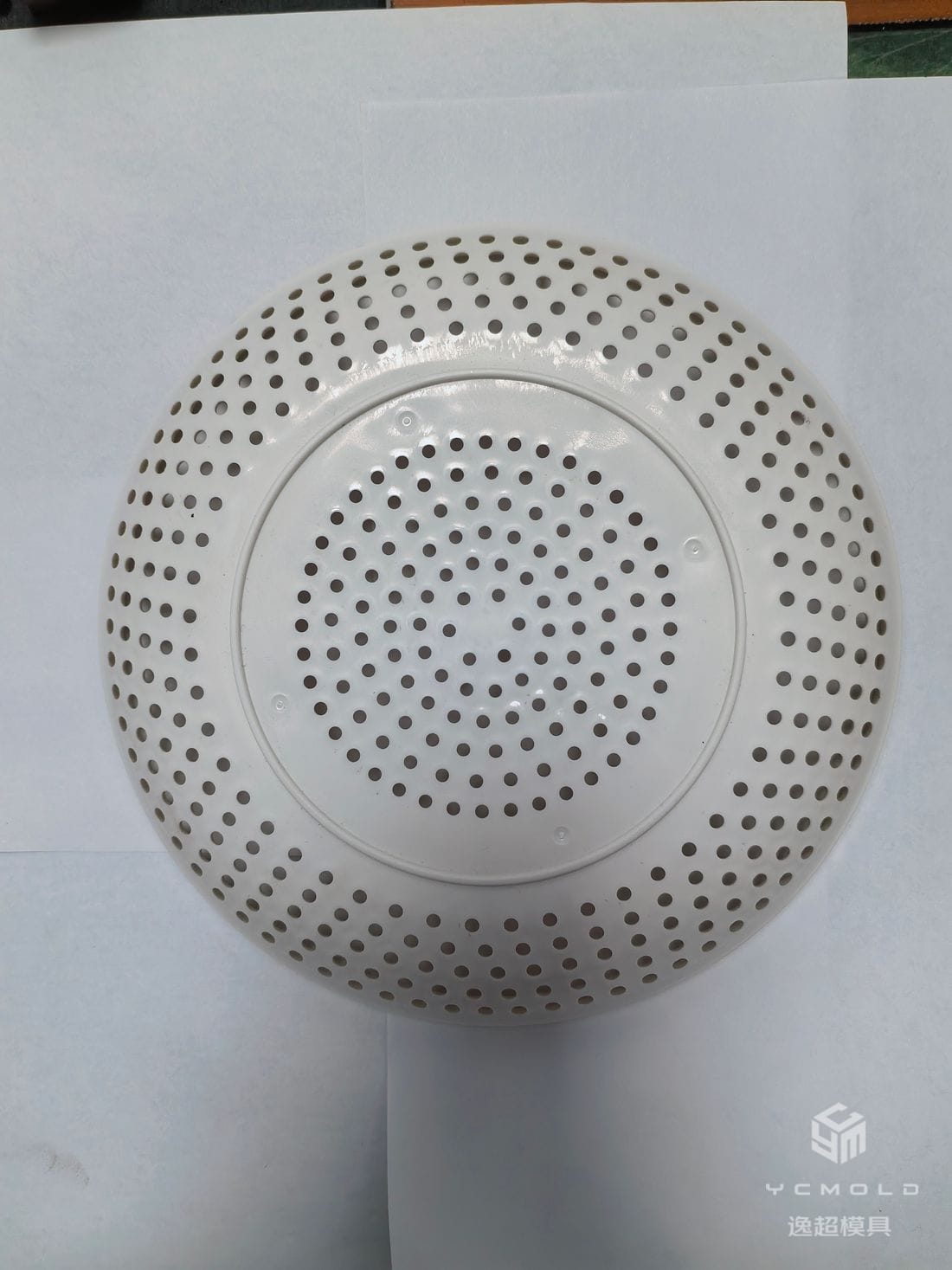
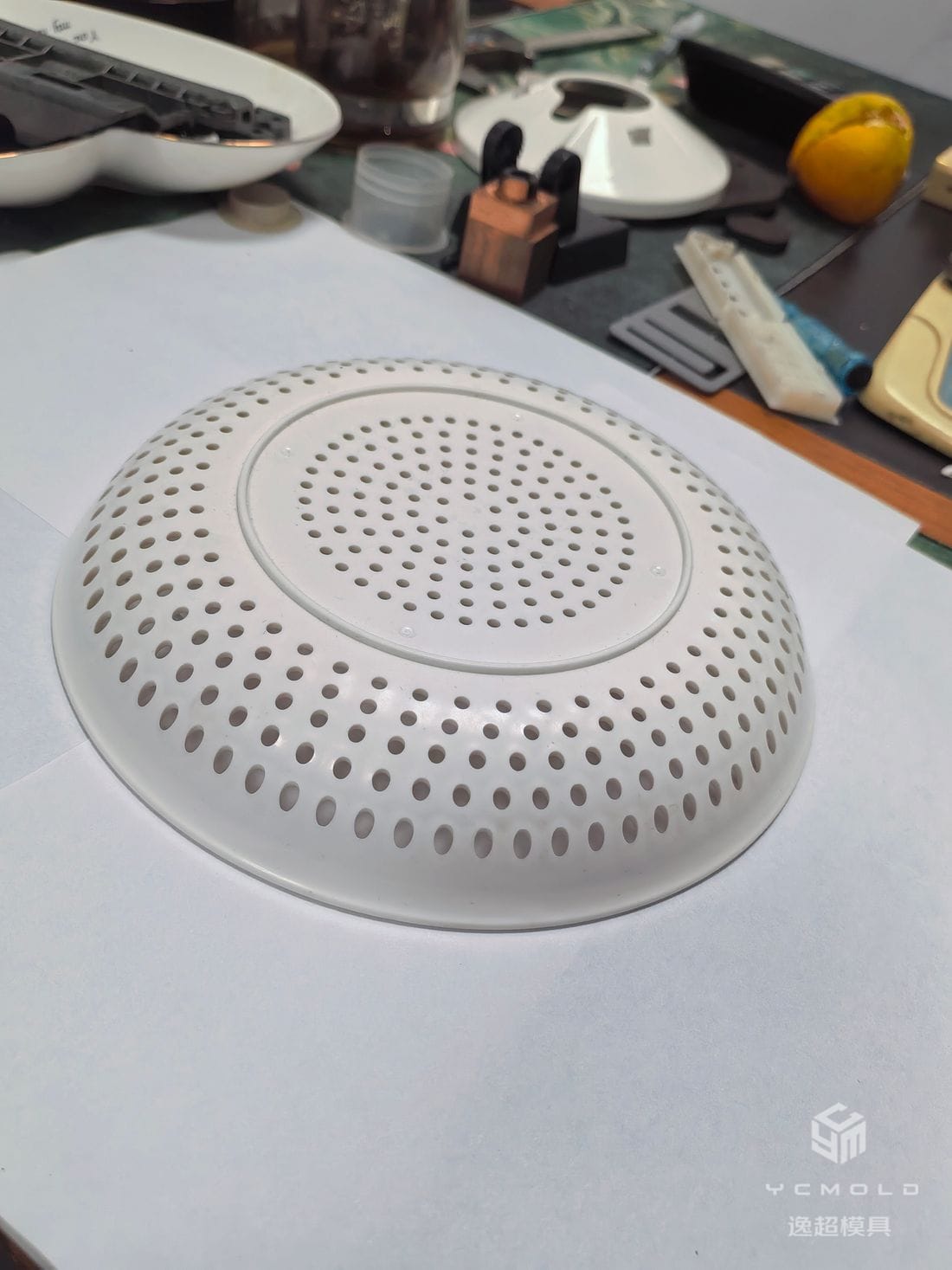
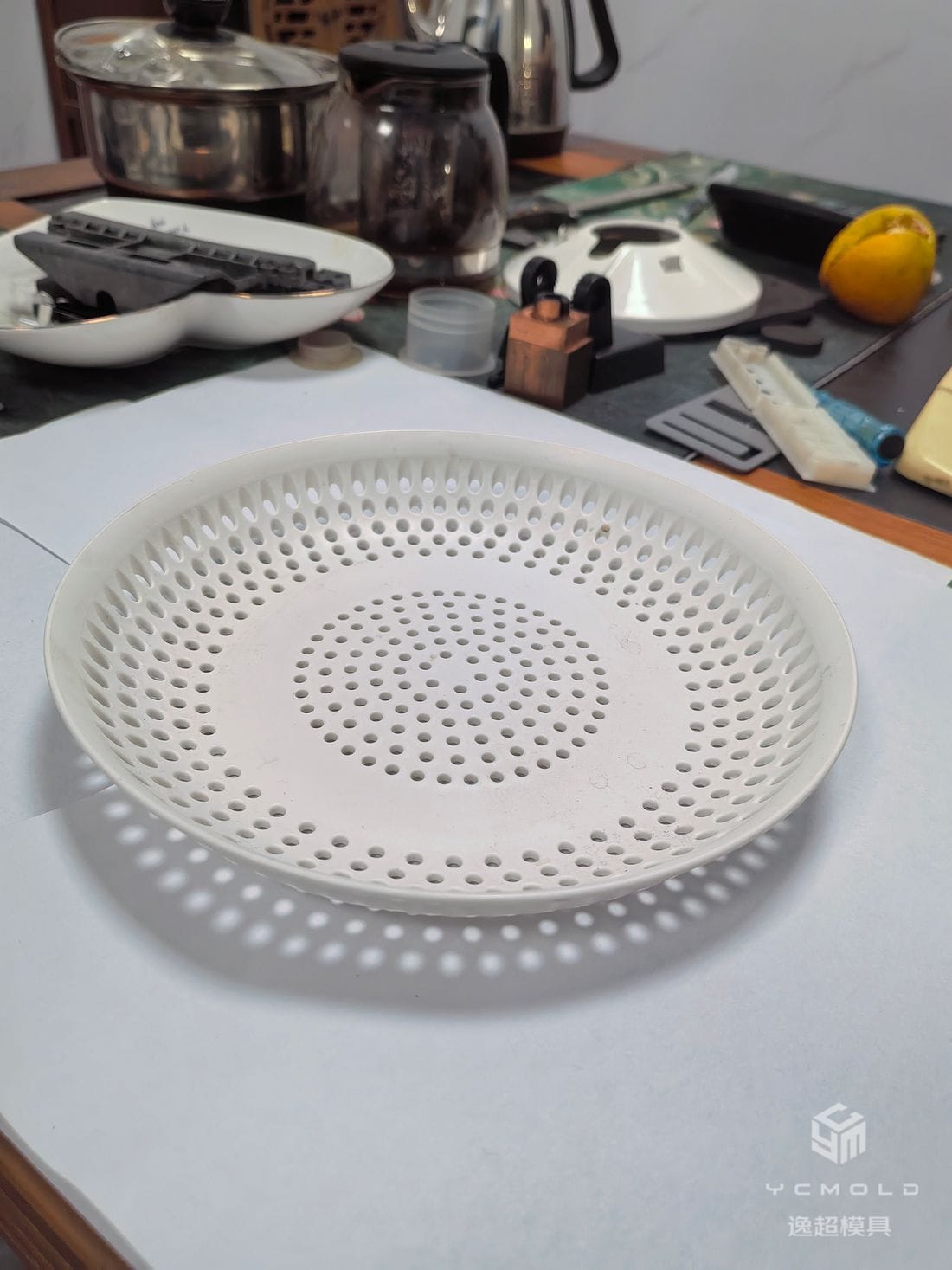
Pre-pump strainer discs
Concentric rings of holes around a spoked centre — flatness decides bypass, and no skin is allowed across the hole mouths
Filter baskets and strainer cups
Deep draw with perforated side walls — draft and hole alignment both have to be right in the tool the first time
Inlet screens and shower filter plates
Fine hole fields where hole consistency and open area are the acceptance criteria, not appearance
Ventilation grilles and mesh covers
Slat or honeycomb patterns — the tool must avoid thin steel, which wears quickly and is expensive to repair
Perforated plates and baffles
Large thin perforated panels where warp is the main fight — settled by balanced ejection and even cooling
Filter frames and screen holders
Rectangular frames with latches — a frame out of square will not seat, so the diagonal tolerance is agreed up front
Anti-clog guards and protective mesh
Outdoor and dirty-water duty, where hole size fights impact resistance and ribs have to make up the difference
Grille discs and flow spreaders
Spoke and ring structures that block debris without blocking flow — the open-area ratio has to be calculated, not guessed
Which material, and why
PP — The default for water filtration — chemically resistant, no moisture pick-up, cheap. Thin walls and long flow need a high-flow grade or the hole field will not fill
PA(尼龙) — Heat resistance and toughness for hot-water screens and loaded baskets. It absorbs moisture and the holes move, so fine-hole parts need allowance
POM — Dimensionally stable and low friction — frames, slides and screen holders that come apart repeatedly
ABS — Appliance internals and visible grilles — cheap and easy to colour, though it does not like prolonged water or strong solvents
PC — Clear strainer covers so a blockage is visible at a glance; sensitive to solvent stress cracking, so watch what it is cleaned with
Lucas — Lucas@ycmold.top · WhatsApp +86 183 6966 7875 · No.363 Shengli West Street, Weicheng District, Weifang, Shandong, China