Home / Catalogue / Automotive plastics
Automotive plastic parts and tooling
Interior brackets, connector housings, clips and small covers. On automotive work the question is not whether a part can be moulded, but whether it is right the first time and identical batch after batch — dimensional reports and material certificates supplied to your programme’s requirement.
The barrier in automotive work is documentation, not machinery. A bracket is not hard to mould; what is hard is being identical every batch, with a dimensional report, traceable material lots and a record of every tool change. Plenty of small shops can mould the part and cannot produce that paper, and the audit stops there. We settle the documentation requirement at quoting stage — tell us what level of submission your programme needs and we build the schedule around it, rather than discovering the mismatch the week before delivery.
Our range is small and medium parts: interior brackets, connector housings, clips and small covers. Tooling for these is compact and quick to change, which suits prototyping and a ramp-up in modest volumes. Large exterior body panels — bumpers, fenders — are outside what we do; they need big platens and a painting line, and we neither run them nor quote them.
The certification question comes first, so it goes first here: we are a family-run shop without IATF 16949, and if your programme mandates a certified supplier we are not the right fit. Where it does not, what we can supply is what actually gets used — dimensional inspection reports, material certificates with lot numbers, first-article samples, a process flow diagram, a tooling and gauge list, and a record of every tool change. We cannot issue a proper MSA or a full PFMEA, and we have no in-house laboratory for material property testing; those results come from the resin supplier. Tell us the submission level when you ask for a price and we prepare to it, rather than finding the gap the week before delivery.
Under-hood parts sit at 80–120 °C continuously, where glass-filled PA66 is the standard answer — heat resistant, oil resistant, stiff enough. Closer to the exhaust or hotter still, higher-grade PA or PPS comes in and the cost climbs noticeably. The detail that gets skipped is moisture: PA absorbs water, so the same dimension measured dry-as-moulded and after conditioning are not the same number. Agree up front which one acceptance is measured on, or it becomes an argument at the customer end.
Tool changes fall into three cases and they are priced differently. If we made the error or misread the drawing, the change is free and we carry it. If you are changing the design, it is quoted on the work — small changes usually a couple of thousand RMB over three to five days, larger ones re-evaluated. Normal wear repair is charged by the hour. In every case the proposal and the price reach you before the tool is touched, never after, and a record of the change stays in the file for your traceability.
2 business days · 25–45 days · Dimensional report + material cert · FOB Qingdao · T/T
Automotive plastics — photos from our floor
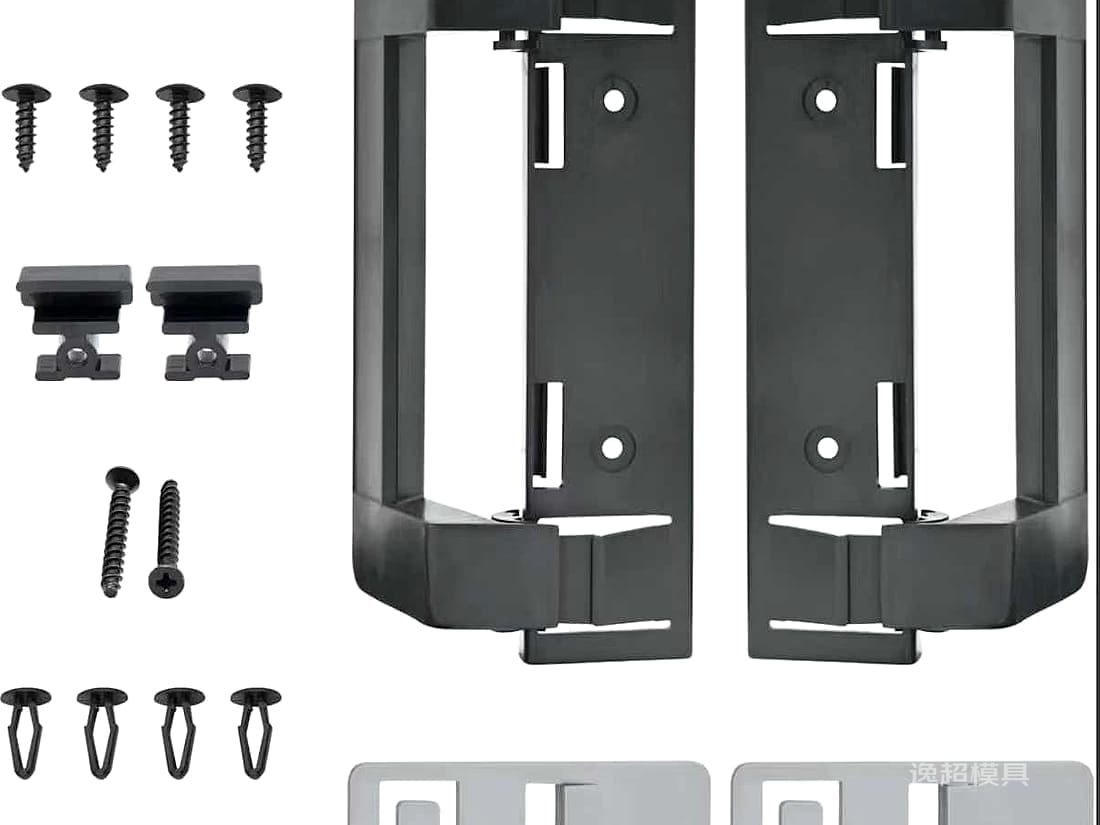
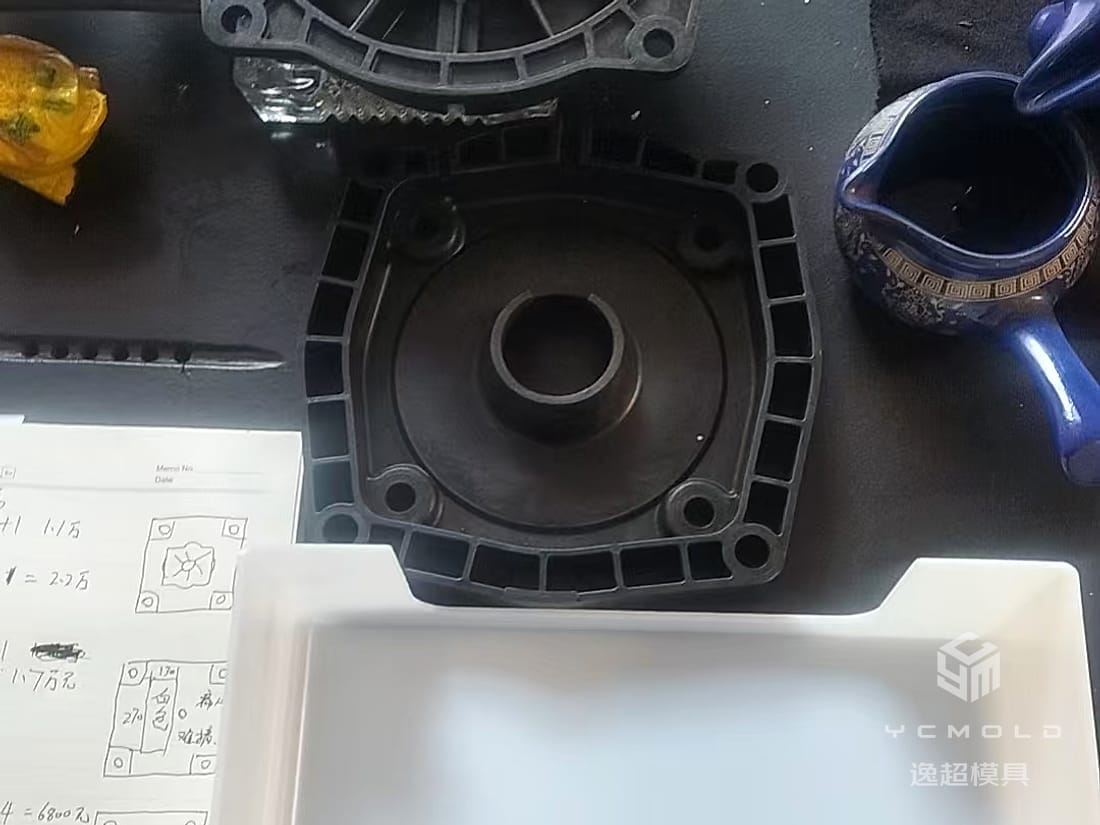
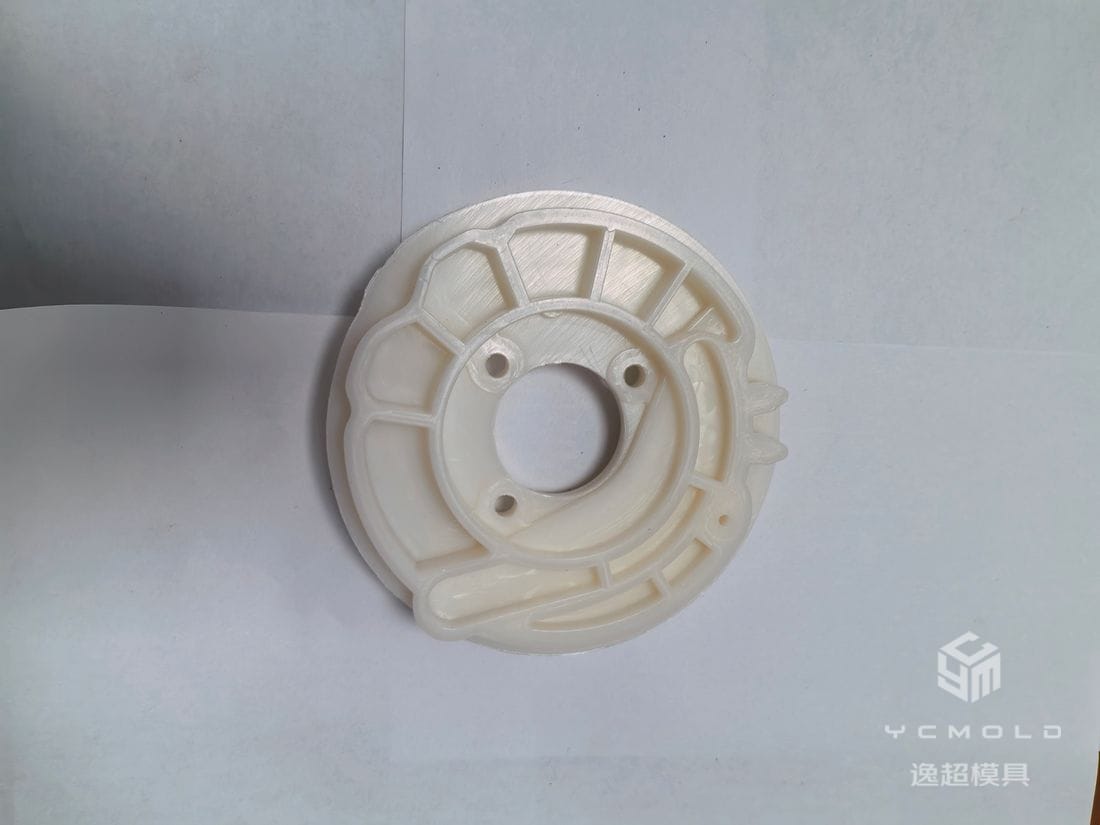
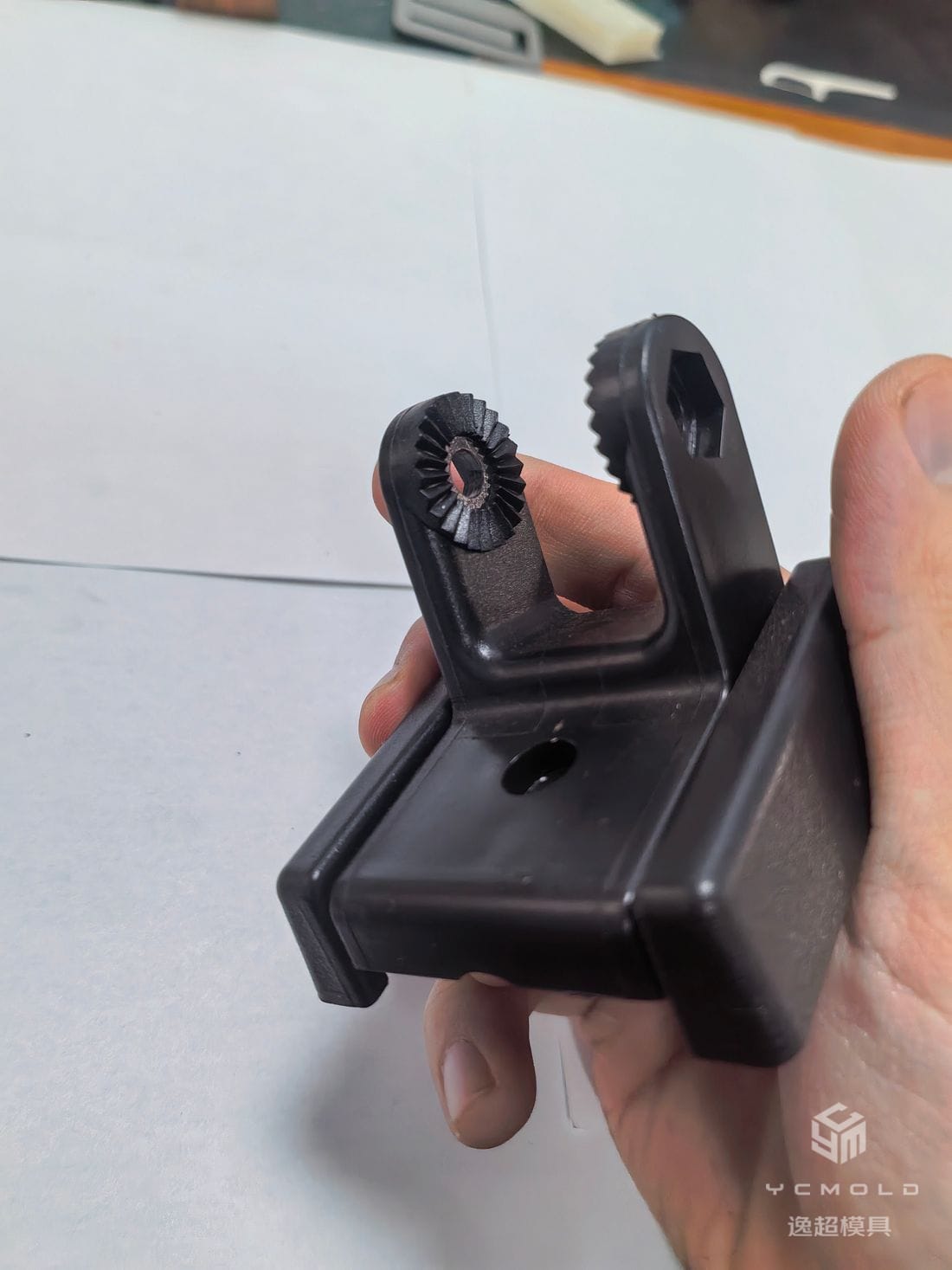
Part types we actually run
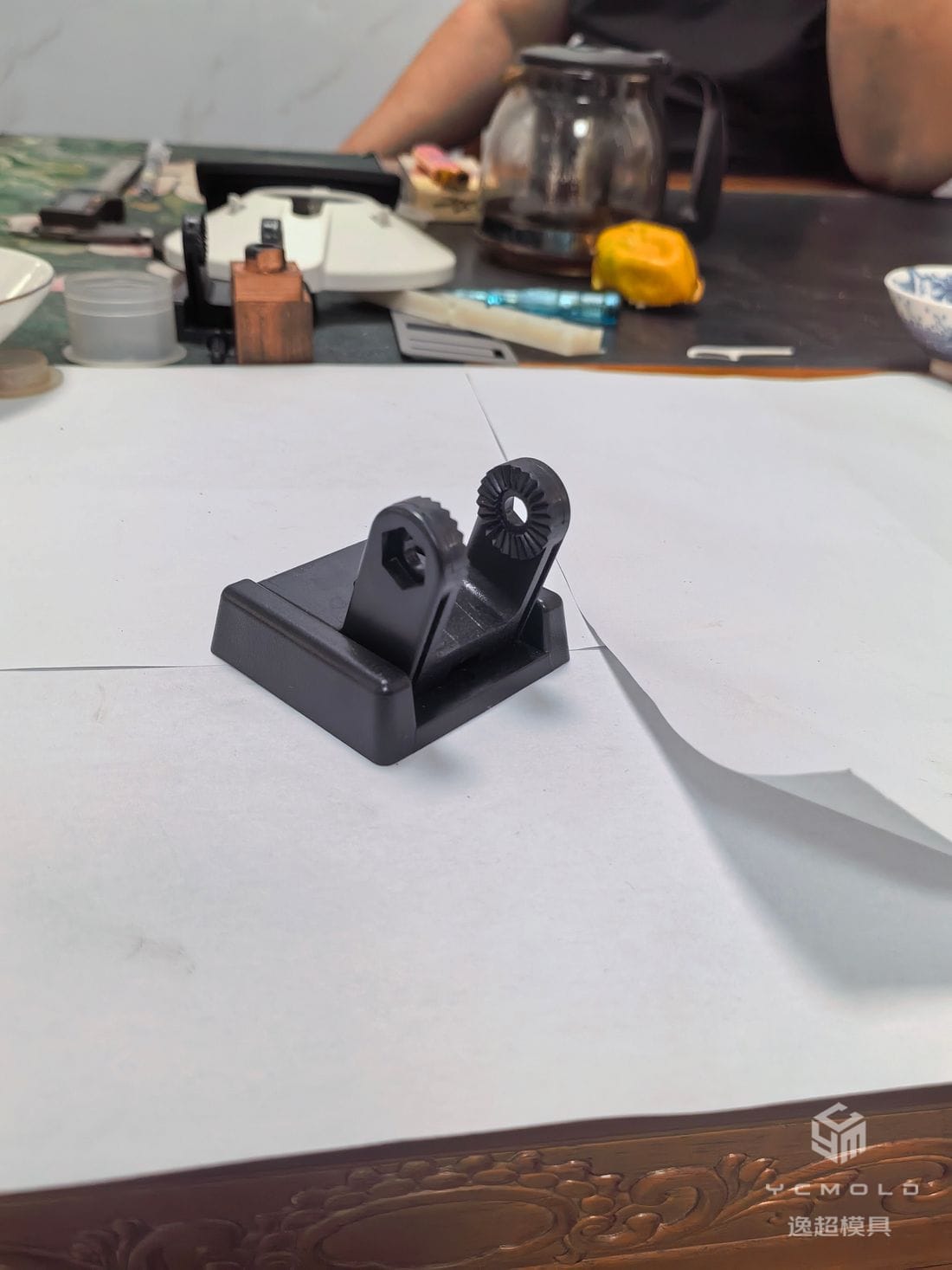
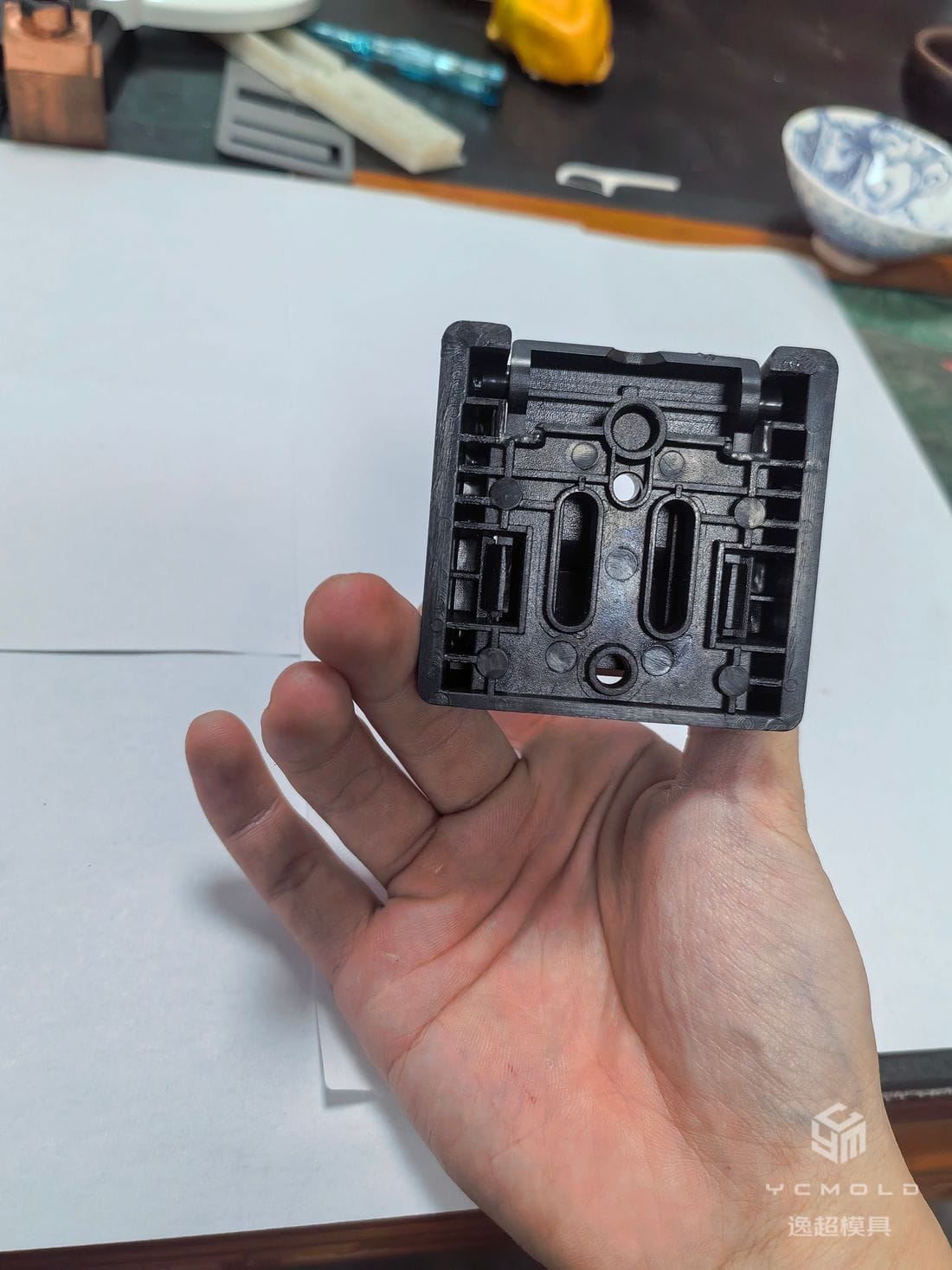
Interior brackets and mounting points
Usually glass-filled PA — anisotropic shrinkage from fibre orientation is what causes warp
Connector bodies and housings
Terminal position matters; inserts should be replaceable individually once they wear
Clips, retainers and grommets
Small and precise — the radius at the cantilever root decides how many fittings it survives
Small covers and trim caps
Cosmetic parts, with texture and colour held to interior trim standards
Structural brackets and reinforcement plates
Load paths need agreeing with you — wall thickness and rib layout set the stiffness
Under-hood covers and shields
Heat and oil resistance drive the resin choice — PA grades, glass-filled where needed
Which material, and why
PA66 + GF — The mainstay for loaded automotive parts: stiff, heat-resistant and oil-resistant. Fibre orientation drives shrinkage, so gate position follows the load direction
PA(尼龙) — Unfilled grades are tough and springy — clips, grommets and anything that has to flex
ABS — Interior cosmetic parts where surface and colour matter and cost has to stay in range
PC-ABS — The step up for interior parts needing heat and impact resistance
POM — Wear parts, gears and slides that need dimensional stability
TPE — Soft-touch parts and seals, overmoulded onto a rigid substrate
Lucas — Lucas@ycmold.top · WhatsApp +86 183 6966 7875 · No.363 Shengli West Street, Weicheng District, Weifang, Shandong, China